Bone Broth Benefits: What the Evidence Really Says
Medical note: This article is for general information only and is not medical advice. Bone broth is a food, not a treatment. If you have kidney disease, gout, a histamine intolerance or follow a prescribed diet, talk to your doctor or dietitian before making it a daily habit.
Related reading: how much protein is in bone broth and collagen vs bone broth.
Related reading: learn which gelatin benefits are backed by research and which are hype.
The bone broth benefits you read about online are often exaggerated, so here is what the evidence supports. Bone broth has gone from a grandmother’s kitchen staple to a wellness headline. You will see claims that it heals the gut, rebuilds joints, smooths wrinkles and even helps you sleep. Some of that sounds plausible, since bones and connective tissue do contain collagen and amino acids. But plausible is not the same as proven.
This guide gives you the honest version. You will see what is actually in a cup of bone broth, which benefits are reasonable, which are mostly based on animal studies or on supplements, who should be careful, and how to choose a good broth. If you want to make your own, our step-by-step guide on how to make bone broth at home covers three methods.

Table of Contents
Table of Contents
Bone Broth Benefits: Key Takeaways
- The real bone broth benefits are hydration, comfort and a modest amount of protein.
- Claims about gut, joint, skin and sleep bone broth benefits are mostly based on animal studies or supplements.
- A cup of bone broth provides roughly 35 to 50 calories, with protein and sodium that vary by brand.
- People with kidney disease, gout or histamine intolerance should ask a doctor before relying on bone broth benefits.
- Choosing low-sodium or homemade broth keeps the bone broth benefits you want without extra salt.
- Most bone broth benefits are modest, so treat broth as a healthy food, not a remedy.
- Pair these bone broth benefits with our homemade recipe to get the most value from your bones.
Bone Broth Benefits: Quick Summary
- What it does well: provides warm fluid, a modest amount of protein, a little sodium and potassium, and an easy, soothing way to eat when you do not feel like a full meal.
- What is not proven: healing a “leaky gut”, rebuilding joints, reversing wrinkles or improving sleep. Most evidence comes from lab and animal studies, or from collagen and glycine supplements at much higher doses than a cup of broth supplies.
- Who should be careful: people with kidney disease, gout, histamine intolerance or a low-sodium diet, and anyone who buys long-simmered broth from an unknown source.
- Bottom line: bone broth is a healthy, low-calorie food that can be part of a balanced diet. It is not a miracle remedy.
What Is Bone Broth?
Bone broth is a liquid made by simmering animal bones, often with a little connective tissue, vegetables and herbs, for many hours. The long cooking time is the key difference from regular stock. Slow simmering breaks down collagen in the bones and joints into gelatin, which is why a good bone broth turns wobbly and jelly-like when it is chilled.

| Typical cooking time | Main idea | Texture when cold | |
|---|---|---|---|
| Broth | 45 minutes to 2 hours | Meat simmered for flavor | Usually liquid |
| Stock | 2 to 4 hours | Bones simmered for body and flavor | Light gel |
| Bone broth | 6 to 24 hours or more | Bones simmered long for collagen and richness | Often firm gel |
Cooking times and definitions vary by brand and cook, and there is no legal standard for the term “bone broth”. Some store-bought products labeled this way were simmered only briefly, so the label alone tells you little.
What Is in a Cup of Bone Broth?
Nutrition varies a lot between homemade and commercial products, between beef and chicken, and with how many bones and how much water you use. Here are reasonable ranges based on typical figures from the USDA FoodData Central database and labels of commercial products:
| Nutrient (per cup, about 240 ml) | Typical range | Notes |
|---|---|---|
| Calories | 35 to 50 | Low in calories |
| Protein | About 9 g in many commercial products; homemade is often lower | Depends on the bones and cooking time |
| Fat | 0.5 to 3 g | Skimming reduces it |
| Sodium | Under 100 mg (unsalted homemade) to 450 mg or more (commercial) | Check the label |
| Potassium | About 200 to 300 mg | Relevant for kidney disease |
| Glycine | Roughly 500 to 1,700 mg | Varies widely |
| Calcium and magnesium | Small amounts, usually under 5% of the daily value | Bone broth is not a good calcium source |
The numbers explain why bone broth is “good but not magical”. It is a low-calorie, hydrating source of some protein. It is not a rich source of vitamins or minerals, and the amounts of collagen and amino acids vary from batch to batch.
Possible Bone Broth Benefits: What the Evidence Says
1. Hydration and comfort
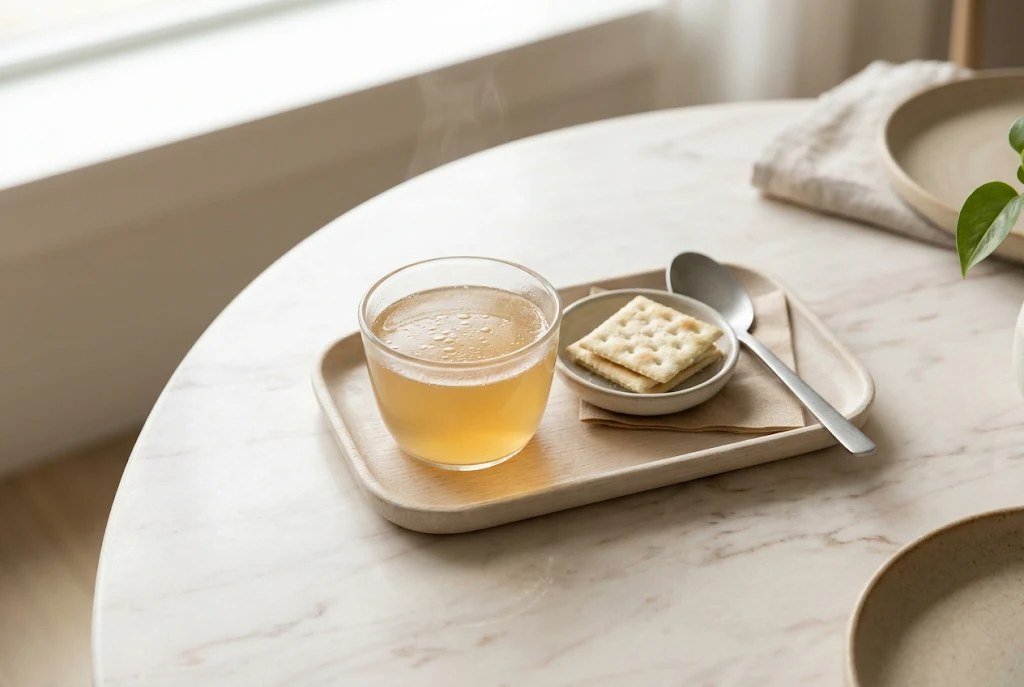
This is the most practical benefit. Warm broth counts as a fluid, it tastes savory instead of sweet, and many people find it easier to sip than plain water, especially in cold weather or when they feel unwell. When you are low on appetite, a cup of warm broth is a gentle way to take in fluid, a little protein and some salt.
Evidence: reasonable, because it follows from what broth is. Verdict: useful.
2. A modest source of protein
A cup of a good commercial broth may have around 9 grams of protein, and homemade broth can be lower. That helps, but it does not replace a protein-rich meal. Collagen is also an incomplete protein, because it is low in tryptophan and several other essential amino acids. Think of broth as a small protein top-up, not your main source. For ideas that reach 20 to 30 grams, see our high protein breakfast ideas.
Evidence: measurable but limited. Verdict: a small contribution.
3. Gut health
Gelatin and amino acids such as glutamine and glycine have been studied for gut lining health, mostly in animals and in laboratory models. There are no good human trials showing that drinking bone broth heals the gut or treats “leaky gut”. Digestive conditions such as inflammatory bowel disease need medical care.
Evidence: weak for broth itself. Verdict: unproven.
4. Joints and bones
Collagen supplements have been studied for joint pain and skin, and some small trials show modest benefits. But those studies use specific doses, often 5 to 15 grams a day of collagen peptides, which is far more than a cup of broth is likely to provide. Bone broth also contains little calcium, so it is not a reliable way to build bone density.
Evidence: some support for collagen supplements, little for broth. Verdict: unproven.
5. Skin
The idea that eating collagen builds collagen in your skin is appealing, but when you eat collagen your body breaks it down into amino acids and uses them wherever they are needed. Results from collagen supplement trials are mixed, and no good studies test bone broth for skin health.
Evidence: weak. Verdict: unproven.
6. Sleep and relaxation
Glycine has been tested for sleep quality in small studies, usually at about 3 grams before bed. A cup of broth supplies roughly 0.5 to 1.7 grams, so you would need several cups to match that dose. A warm, quiet drink in the evening can still be a calming ritual, but that is a benefit of the ritual rather than of a specific nutrient.

Evidence: weak for broth. Verdict: unproven, but a pleasant habit.
7. Weight management
Broth is low in calories and takes time to sip, and some research on soups suggests they can help people feel full on fewer calories. No studies show that bone broth specifically causes weight loss. It can be a smart swap for a higher-calorie snack, but it is not a fat-loss tool.
Evidence: indirect. Verdict: may help satiety, not proven for weight loss.
Bone Broth Benefits at a Glance
| Claimed benefit | Strength of evidence for broth | Reasonable takeaway |
|---|---|---|
| Hydration and comfort | Reasonable | Useful, especially when appetite is low |
| Protein | Measurable, limited | Small top-up; not a main source |
| Gut health | Weak (animal, lab) | Do not rely on it for gut conditions |
| Joints and bones | Weak | Collagen supplements have more data; broth has little calcium |
| Skin | Weak | No good broth-specific studies |
| Sleep | Weak | Glycine doses in studies are higher than in a cup |
| Weight loss | Indirect | Low-calorie, filling swap; not a solution |
Downsides and Who Should Be Careful
- Sodium. Many commercial broths contain 400 to 600 mg of sodium per cup. If you follow a low-sodium diet or have high blood pressure, choose low-sodium or unsalted versions, or make your own.
- Kidney disease. Broth contains potassium, protein and sodium. People with kidney disease often need to limit these, so ask your care team first.
- Gout. Meat and bone-based broths contain purines. If you have gout or high uric acid, ask your doctor how much is reasonable.
- Histamine intolerance. Long cooking and long storage increase histamine in some foods. If you notice headaches, flushing or digestive upset after bone broth, a lower-histamine alternative may suit you better.
- Metals and quality. A small 2017 study on metals in bone broths found lead levels low, but the evidence is limited and quality varies. Buy from sources you trust and avoid relying on broth as your main food.
- Food safety. Homemade broth should be cooled quickly and refrigerated or frozen. See our guide on making and storing bone broth safely.
How Much Bone Broth Should You Drink?
There is no official recommended amount. A common approach is about 1 cup a day, or a few times a week, as part of a varied diet. More is not necessarily better, especially because of the sodium in many commercial products. If you want more protein, a cup of broth is a nice addition, but it should sit alongside eggs, dairy, legumes, fish, tofu or meat rather than replace them.
Homemade vs Store-Bought Bone Broth
- Check the label. Look for sodium per cup, protein per cup, and the ingredient list. Short ingredient lists with bones, water, vegetables and herbs are better than lists with “natural flavors” and yeast extract.
- Protein tells you something. If a product lists only 1 to 3 grams of protein per cup, it is closer to a regular broth or stock.
- Make your own if you can. You control the salt and the cooking time, and the cost per cup is low if you use leftover bones. See how in our homemade bone broth recipe.
Ways to Use Bone Broth
- Sip it plain from a mug with a pinch of salt, ginger or turmeric.
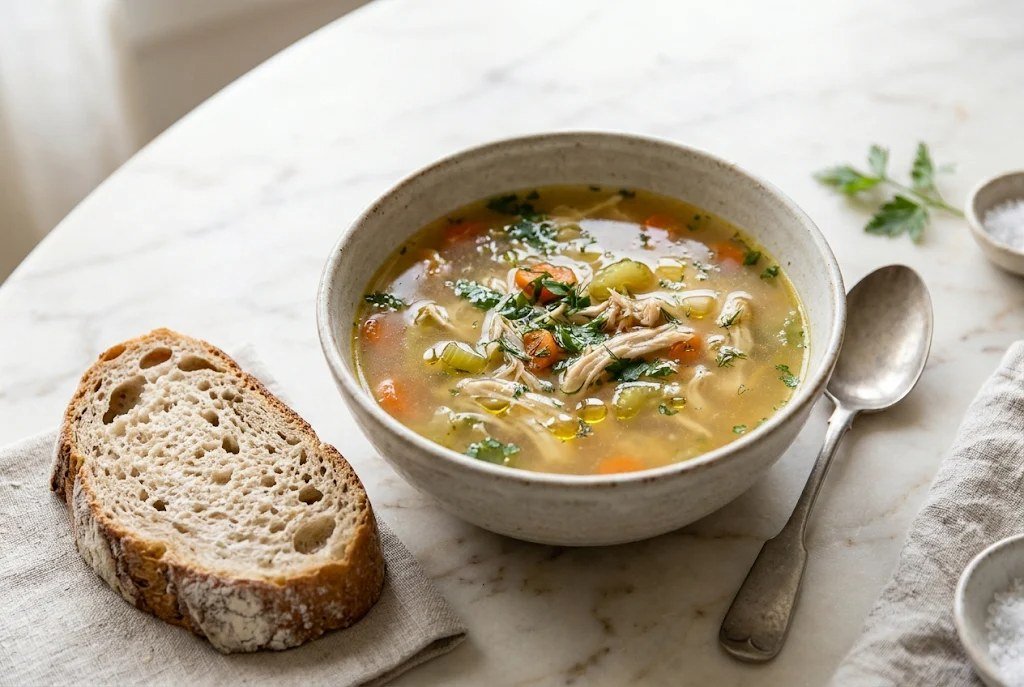
- Use it as the base for chicken soup, vegetable soup, stews and ramen.
- Cook rice, quinoa or lentils in broth instead of water for extra flavor.
- Add a splash to sauces, gravies and mashed potatoes.
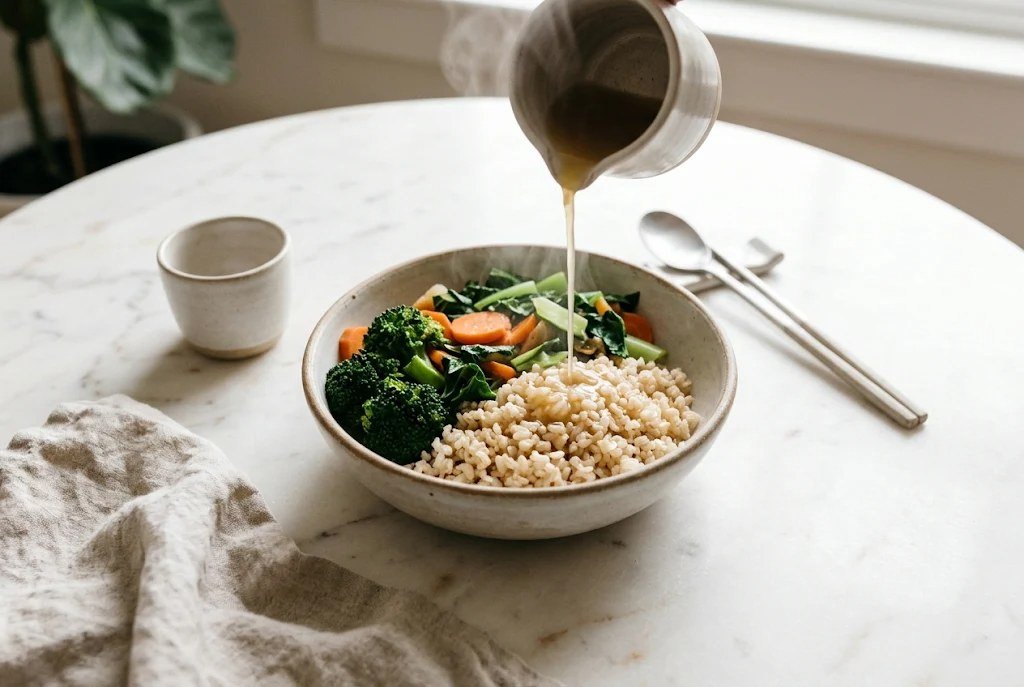
- Pour warm broth over steamed vegetables and grains for a simple bowl.
Bone Broth vs Collagen Supplements vs Gelatin
If your goal is collagen, you have three options. Bone broth gives a variable, usually small amount along with fluid and salt. Collagen peptides are a measured, concentrated powder that dissolves in hot or cold liquids. Gelatin is partially hydrolyzed collagen that sets when it cools. Our comparison of gelatin vs collagen peptides explains the differences, and our guide on gelatin for Ozempic side effects covers when a warm gelatin or broth drink may be helpful. If you are managing appetite changes, what to eat on Ozempic is also worth reading.
Frequently Asked Questions About Bone Broth Benefits
Is bone broth good for you?
Yes, in moderation. It is a low-calorie, hydrating food with some protein. The more dramatic claims about healing the gut, joints or skin are not backed by good human studies of bone broth itself.
Does bone broth heal leaky gut?
There is no good evidence that it does. Gelatin and amino acids have been studied in animals and lab models, but human trials of bone broth are lacking. See a doctor for digestive symptoms.
How much protein is in bone broth?
Many commercial products list about 9 grams of protein per cup. Homemade broth varies widely and is often lower, depending on the bones, cooking time and amount of water.
Can you drink bone broth every day?
Many people do, usually about a cup a day. Watch the sodium in store-bought products, and check with your doctor if you have kidney disease, gout or a histamine intolerance.
What is the difference between bone broth and stock?
Bone broth is simmered much longer, often 12 to 24 hours, to extract collagen and make a richer liquid. Stock is usually simmered 2 to 4 hours. There is no legal standard for the terms, so labels vary.
Does bone broth break a fast?
Yes, strictly speaking. Bone broth contains calories and protein, so it ends a strict fast, although some people include it in modified fasting plans.
Can bone broth help with weight loss?
It is low in calories and can be filling, so it may help as a swap for higher-calorie snacks. There is no evidence it causes weight loss by itself.
Is homemade bone broth better than store-bought?
Homemade gives you control over salt and cooking time. Good store-bought options exist, so compare sodium, protein per cup and the ingredient list.
The Bottom Line on Bone Broth Benefits
Bone broth is a comforting, hydrating, low-calorie food with a modest amount of protein and a savory taste that makes it easy to enjoy. That is reason enough to include it in your diet if you like it. The bigger promises about gut, joints, skin and sleep go beyond what current evidence supports for the broth itself. Treat it as a pleasant part of a balanced diet, choose low-sodium options if salt is a concern, and use our guide to making bone broth at home to get the most flavor and value from your bones.




8 Comments