
Gelatin for Ozempic Side Effects: 5 Proven Ways It Helps
Gelatin for Ozempic side effects is not a wellness trend or a speculative claim — it is a recommendation that appears on Ozempic’s own official website. Under nausea management tips on ozempic.com, the manufacturer lists gelatin directly alongside soups and bland foods as a recommended dietary choice during side effect episodes. That single manufacturer citation makes gelatin for Ozempic side effects one of the most credible food-based support strategies available to people on semaglutide.
This guide covers the 5 most common Ozempic side effects and the specific ways gelatin for Ozempic side effects works — through its amino acid profile, gut-supporting properties, and physical characteristics. The 5 side effects covered are nausea, constipation, hair loss, Ozempic face, and muscle loss. For each one, you will find the mechanism, the evidence, and the exact practical protocol for using gelatin for Ozempic side effects support. For the full food-based GLP-1 strategy, see our natural ozempic complete guide.
This is not a guide about replacing Ozempic or treating medical symptoms without physician guidance. Always consult your prescribing physician before adding any dietary protocol alongside prescription medications. See our natural ozempic drink guide for the complete ACV version.
Table of Contents
Table of Contents
Why Gelatin for Ozempic Side Effects Makes Scientific Sense
Understanding why gelatin for Ozempic side effects is supported by evidence requires understanding what gelatin provides that other common foods do not.
High glycine and proline content
Gelatin is approximately 27 percent glycine and 12 percent proline by amino acid content — the two primary building blocks of collagen, gut lining tissue, and connective tissue. This amino acid profile is what makes gelatin for Ozempic side effects relevant to multiple problems simultaneously: gut lining repair, skin collagen support, hair follicle maintenance, and protein supplementation on a suppressed appetite.
Gentle and easy to digest
Gelatin dissolved in warm water is one of the most easily digestible protein sources available. It requires minimal digestive work, introduces no fat or fiber that could worsen nausea, and provides water content that supports hydration — critical on GLP-1 medications that blunt thirst signals alongside hunger signals. This is precisely why gelatin for Ozempic side effects appears on the manufacturer’s own nausea guidance page.
Collagen precursor amino acids
Glycine, proline, and hydroxyproline in gelatin are the primary amino acids the body uses to synthesize collagen — the structural protein that makes up skin, hair follicles, joint cartilage, and connective tissue. Two of the most distressing Ozempic side effects — hair loss and Ozempic face — involve collagen and structural protein depletion. Daily gelatin for Ozempic side effects delivers these precursors in a consistently bioavailable form.

5 Ozempic Side Effects Gelatin Helps With
1. Nausea — Gelatin for Ozempic Side Effects Starts Here
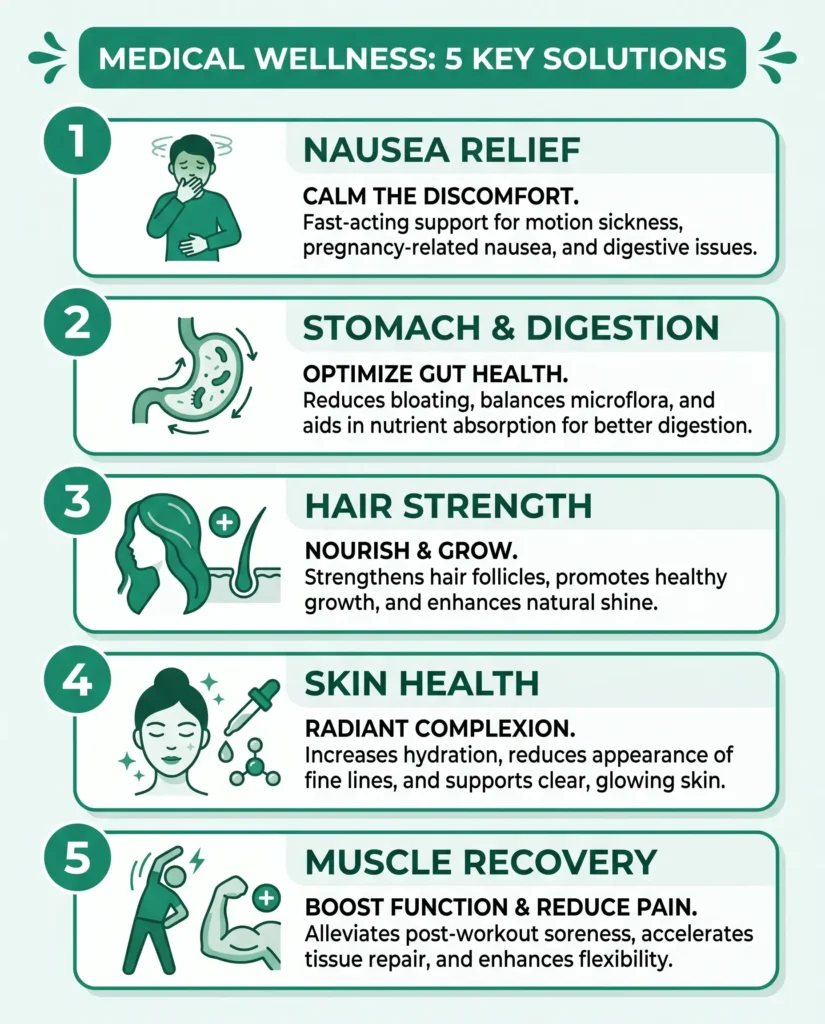
Gelatin for Ozempic side effects begins with nausea because it is the most reported problem — affecting 15 to 20 percent of users according to FDA clinical trial data and ranking as the top adverse event in the FDA monitoring system as of May 2026. Nausea is most common when starting Ozempic or increasing the dose.
Ozempic’s official website recommends eating foods that contain water — specifically listing soups and gelatin — as a dietary strategy for managing nausea. This recommendation makes sense given gelatin’s properties: bland, easy to digest, no fat or fiber to worsen symptoms, and provides water and protein in a form the body tolerates even when appetite is severely suppressed.
How to use gelatin for Ozempic nausea
Dissolve one tablespoon of unflavored gelatin in warm — not hot — water. Sip slowly. Omit ACV, lemon juice, and any acidic ingredients when using gelatin for Ozempic side effects specifically around nausea. Plain gelatin broth is the most tolerable version. Consume within 30 minutes of preparation before it sets.
2. Constipation — The Second Reason to Use Gelatin for Ozempic Side Effects
Gelatin for Ozempic side effects addresses constipation through two pathways. First, glycine supports gut lining integrity and smooth muscle function in the intestinal wall — relevant because semaglutide’s gastric emptying delay affects GI motility throughout the digestive tract. Second, and more practically, taking gelatin dissolved in a full cup of warm water adds to daily fluid intake.
Dehydration is a major driver of constipation on GLP-1 medications. Ozempic blunts thirst signals alongside hunger signals, leaving many users mildly dehydrated without realizing it. Using gelatin for Ozempic side effects as a daily warm drink effectively forces a cup of fluid intake at each dose, which directly supports hydration and bowel regularity.
How to use gelatin for Ozempic constipation
Take one tablespoon of unflavored gelatin dissolved in a full cup of warm water before each main meal. Maintain at least 8 cups of total daily fluid intake — intentional hydration is essential on GLP-1 medications because the thirst signal that normally reminds you to drink is suppressed.
3. Hair Loss — Gelatin for Ozempic Side Effects and Keratin Support
Gelatin for Ozempic side effects is relevant to hair loss because the primary mechanism behind Ozempic-related alopecia — telogen effluvium — is driven by rapid weight loss and inadequate protein intake. When calorie intake drops dramatically and weight loss accelerates, the body can deprioritize hair follicle maintenance. The FDA adverse event monitoring system recorded 659 reports of alopecia in Ozempic users as of May 2026.
Hair follicles are composed largely of keratin, a structural protein built from glycine, proline, and cysteine. While gelatin does not contain cysteine, its high glycine and proline content supports the collagen matrix surrounding hair follicles and the connective tissue of the scalp. More importantly, gelatin contributes to daily protein targets when appetite is severely suppressed — and adequate total protein intake is the most evidence-supported dietary intervention for minimizing telogen effluvium.
How to use gelatin for Ozempic hair loss
Take one to two tablespoons of unflavored gelatin daily — one in the morning and one before dinner. Combine with complete protein sources at every meal. Target a minimum of 80 to 100 grams of total daily protein while on GLP-1 medications to minimize the muscle and structural protein depletion that drives both hair loss and Ozempic face.
4. Ozempic Face — Gelatin for Ozempic Side Effects and Skin Volume
Gelatin for Ozempic side effects addresses Ozempic face — facial volume loss from rapid weight loss combined with reduced collagen synthesis — through its collagen precursor amino acid content. Glycine and proline from gelatin are used directly by the body to synthesize new collagen. Hydroxyproline, also present in gelatin, is used almost exclusively for collagen stabilization.
No food can completely prevent the facial changes that accompany significant weight loss. But daily gelatin for Ozempic side effects like facial volume loss supports the skin’s ability to maintain its collagen matrix as weight changes rapidly. Timing the bedtime dose specifically for overnight skin collagen synthesis — when the body does most of its tissue repair — maximizes the practical benefit.
How to use gelatin for Ozempic face
Take one tablespoon of unflavored gelatin dissolved in warm chamomile tea before bed. This timing specifically targets overnight skin collagen synthesis. Combine with adequate vitamin C intake — vitamin C is required as a cofactor for collagen synthesis and amplifies the benefit of gelatin’s amino acid delivery. For the complete bedtime gelatin recipe, see our gelatin trick before bed guide.
5. Muscle Loss — Gelatin for Ozempic Side Effects and Protein Support
Gelatin for Ozempic side effects addresses muscle loss because research from the STEP 1 clinical trial found that approximately 40 percent of weight lost on semaglutide can come from lean muscle mass rather than fat when protein intake is not actively maintained. When appetite drops by 70 to 80 percent on Ozempic, hitting daily protein targets becomes genuinely difficult — and muscle loss is the most significant long-term risk of inadequate nutrition on GLP-1 medications.
Gelatin for Ozempic side effects provides approximately 6 grams of protein per tablespoon in a form that is easy to consume even when appetite is severely suppressed. While gelatin is not a complete protein, it contributes meaningfully to daily protein totals and is significantly easier to tolerate than solid protein foods during high-nausea periods. For the full pre-meal gelatin method, see our gelatin trick complete guide.
How to use gelatin for Ozempic muscle loss prevention
Take one tablespoon of unflavored gelatin dissolved in warm water or broth before each meal as a protein supplement. Combine with complete protein sources at every meal — Greek yogurt, eggs, lean meat, fish, or cottage cheese. Target 80 to 100 grams of total protein daily. Gelatin for Ozempic side effects is most effective as a protein bridge on days when appetite suppression makes solid food difficult, not as your sole protein source.
Gelatin for Ozempic Side Effects: Daily Protocol
Here is how to structure gelatin for Ozempic side effects support across the day for maximum benefit.
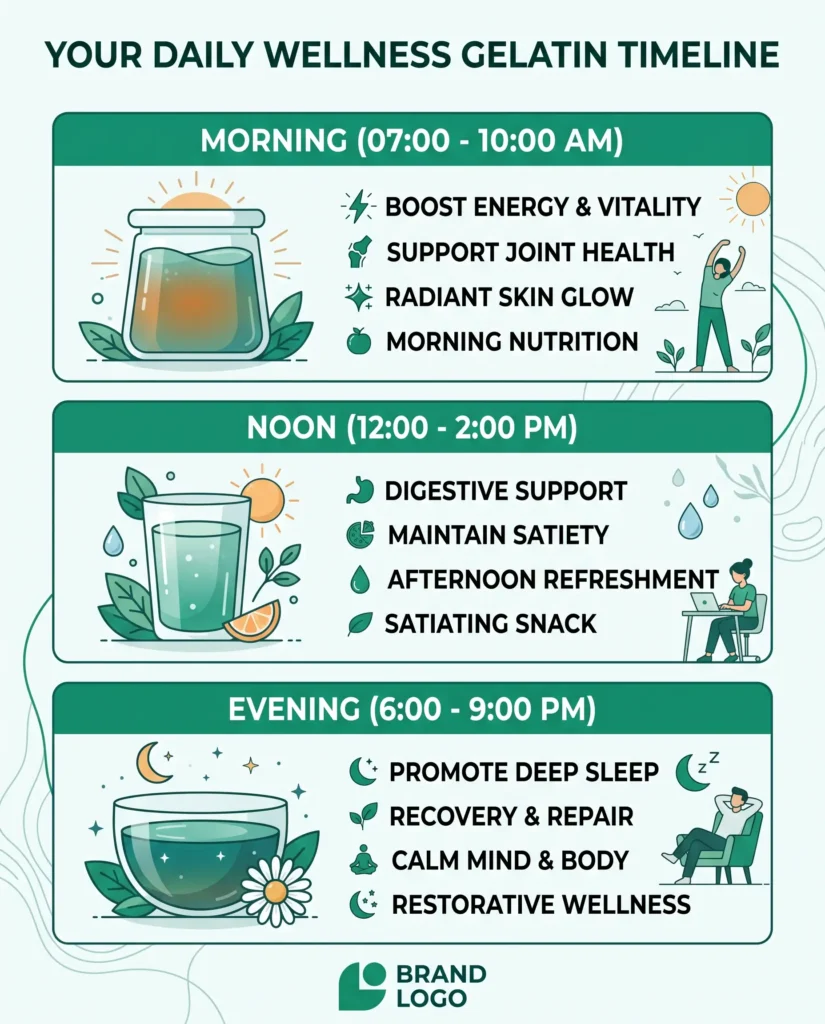
Morning — protein foundation
Dissolve one tablespoon of unflavored gelatin in warm water or broth. Drink before or with breakfast. This first dose of gelatin for Ozempic side effects contributes to daily protein targets and provides gut-lining amino acids at the start of the day.
Before largest meal — GLP-1 gelatin recipe (if tolerated)
If nausea is under control, take the GLP-1 gelatin recipe 20 to 30 minutes before your largest meal — one tablespoon of gelatin in warm water with fresh lemon juice. Omit ACV if you are experiencing any GI sensitivity. This pre-meal dose of gelatin for Ozempic side effects supports protein intake and satiety simultaneously.
Evening — gelatin before bed
One tablespoon of unflavored gelatin dissolved in warm chamomile tea before bed. This bedtime dose of gelatin for Ozempic side effects specifically targets overnight skin collagen synthesis for Ozempic face support and provides glycine’s documented sleep quality benefits.
What to avoid in your gelatin for Ozempic side effects routine
Do not add apple cider vinegar to your gelatin for Ozempic side effects routine if you are experiencing significant nausea or GI discomfort. ACV’s acidity can worsen both nausea and GI sensitivity in Ozempic users. Plain gelatin in warm water is the safest version during high side effect periods. Introduce ACV only once GI side effects have stabilized.
Which Gelatin to Use for Ozempic Side Effects
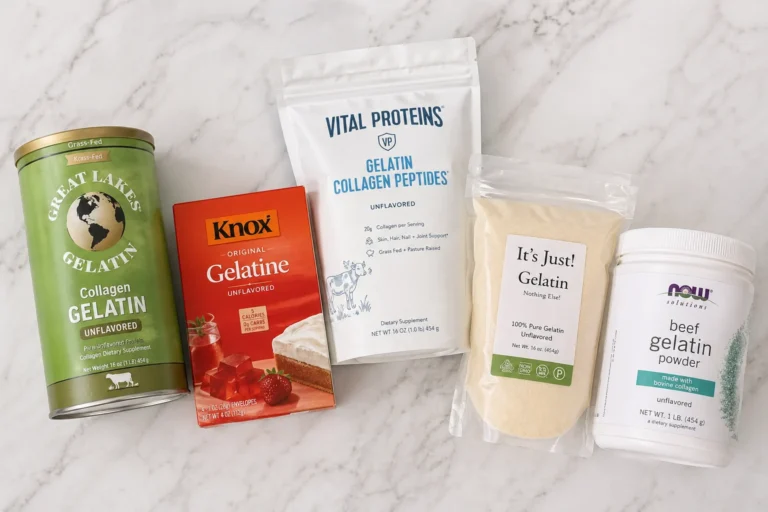
Use plain unflavored gelatin powder only for gelatin for Ozempic side effects — never flavored gelatin mixes. Flavored mixes contain sugar and artificial additives that are counterproductive when managing GI symptoms. Knox Unflavored Gelatine and Great Lakes Unflavored Gelatin are the two most reliable options. Both provide the amino acid profile needed for the side effect support strategies in this guide. For a full brand comparison, see our best gelatin powder for weight loss guide.
Frequently Asked Questions
Does Ozempic’s official website recommend gelatin for side effects?
Yes. The ozempic.com side effects page lists gelatin alongside soups and bland foods as a recommended dietary choice for managing nausea. This makes gelatin for Ozempic side effects one of the few food-based strategies with direct manufacturer validation.
Which Ozempic side effect does gelatin help most?
Gelatin for Ozempic side effects is most directly supported for nausea — where the manufacturer recommendation provides clear guidance. Hair loss and muscle loss follow closely, as both are driven by inadequate protein intake, and gelatin provides easily tolerated protein when appetite is severely suppressed.
How much gelatin for Ozempic side effects should I take daily?
One to two tablespoons of unflavored gelatin daily is the practical range for gelatin for Ozempic side effects support. One tablespoon provides approximately 6 grams of protein and 1.9 grams of glycine. Start with one tablespoon and assess tolerance before increasing. The protocol above spreads the dose across morning and evening for maximum daily coverage.
Can I take gelatin for Ozempic side effects on injection day?
Yes. Gelatin is a food ingredient with no known interactions with semaglutide. Gelatin for Ozempic side effects is safe to use on injection day. Always consult your prescribing physician about any changes to your dietary protocol while on prescription medications.
Will gelatin for Ozempic side effects interfere with weight loss?
No. One tablespoon of unflavored gelatin contains approximately 25 calories — a minimal contribution that does not interfere with Ozempic’s appetite control mechanism. Gelatin for Ozempic side effects at standard doses adds protein and gut support without meaningfully affecting calorie balance or semaglutide’s pharmacological action.
Should I avoid ACV in my gelatin for Ozempic side effects routine?
Start without ACV. Gelatin for Ozempic side effects in plain warm water is the most tolerable version during periods of nausea or GI sensitivity. Once side effects stabilize — typically after the first 4 to 8 weeks of consistent dosing — you can introduce ACV gradually, starting with half a tablespoon. See our natural ozempic drink guide for the complete ACV version.
Conclusion
Gelatin for Ozempic side effects is supported by the manufacturer’s own nausea guidance, the amino acid science behind gut lining support, and the practical reality that gelatin is one of the few protein sources easily tolerated when appetite and GI comfort are severely compromised on semaglutide.
The five side effects covered in this guide — nausea, constipation, hair loss, Ozempic face, and muscle loss — all have a documented connection to what gelatin for Ozempic side effects provides through its amino acid profile. None of these connections represents a medical treatment. All of them represent legitimate, food-based support strategies that work alongside your prescribed medication.
Start with one tablespoon of plain unflavored gelatin in warm water daily. Build to the three-dose protocol as your tolerance improves. Maintain consistent daily protein intake across all food sources. And always keep your prescribing physician informed about your dietary routine while on GLP-1 medications.