How Much Protein Is in Bone Broth? 7 Easy Facts + Chart
How much protein is in bone broth? The honest answer is that it depends, and the range is wide: a cup of ordinary canned broth may contain only 1 to 3 grams, a well-made homemade bone broth about 6 to 10 grams, and some concentrated products up to 20 grams. That gap is why so many people are confused, and why labels and wellness blogs often disagree.
This guide explains how much protein is in bone broth by type, how it compares with other protein foods, why some broths contain more than others, and how to raise the protein in your own cup. If you are trying to decide between collagen powder and broth, read our comparison of collagen vs bone broth, and for a deeper look at what broth can do, see bone broth benefits.

Table of Contents
Table of Contents
How Much Protein Is in Bone Broth? Key Takeaways
- Typical range: about 5 to 10 grams of protein per cup (240 ml) for quality homemade or bottled bone broth.
- Regular broth or stock is lower: canned or boxed broth often has only 1 to 3 grams per cup.
- Powders can be higher: bone broth protein powders often provide 10 to 20 grams per serving.
- It is a modest protein source: a cup has about as much protein as one large egg but far less than chicken, fish or Greek yogurt.
- Quality is incomplete: broth protein is mostly collagen-derived, which is low in tryptophan.
- Read the label: grams of protein per serving, serving size and sodium matter most.
How Much Protein Is in Bone Broth by Type?
There is no single number for how much protein is in bone broth because the product category is so broad. The ranges below are typical values. Check your brand’s label, and see USDA FoodData Central for generic entries.
| Type (1 cup / 240 ml unless noted) | Protein (approx.) | Calories (approx.) | Notes |
|---|---|---|---|
| Canned or boxed chicken or beef broth | 1 to 3 g | 10 to 20 | Mostly flavor and salt; not truly bone broth |
| Light homemade stock (short simmer) | 2 to 6 g | 20 to 40 | Less gelatin, thinner body |
| Homemade bone broth (12 to 24 hours, gels when cold) | 6 to 10 g | 40 to 70 | Higher with more bones and less water |
| Premium bottled or frozen bone broth | 8 to 10 g | 40 to 50 | Label values are usually reliable |
| Reduced or concentrated bone broth | 10 to 15 g | 60 to 90 | Simmered down; very rich |
| Bone broth protein powder (1 scoop, 20 to 25 g) | 15 to 20 g | 80 to 100 | Concentrated; can be mixed into drinks |
| Collagen peptides (1 scoop, about 11 g) | 10 g | 40 | Not broth, but a common add-in |
As you can see, how much protein is in bone broth can differ by a factor of ten. A broth that gels firmly in the fridge usually contains more gelatin, and therefore more protein, than one that stays watery.

Chicken vs Beef Bone Broth: Which Has More Protein?
Many people ask whether chicken or beef gives a higher result when they check how much protein is in bone broth. The difference is usually small. What matters far more is how many bones and how much connective tissue you use, how much water you add and how long you simmer.
- Beef broth made from knuckles, marrow bones and feet is typically darker, richer and often gels well.
- Chicken broth made from carcasses, wings, necks and feet is lighter and cooks faster, and chicken feet add a lot of collagen.
- Pork and fish broths are other options, with fish broth being faster to make but lower in gelatin.
Our complete tutorial on how to make bone broth at home covers ratios and timing for each.
Why Does the Protein in Bone Broth Vary So Much?
- Bone-to-water ratio: more bones and connective tissue per quart of water means more gelatin.
- Type of bones: joints, feet, knuckles and cartilage release more collagen than lean meat bones.
- Simmering time: 12 to 24 hours (beef) or 6 to 12 hours (chicken) extracts more than a short simmer.
- Reduction: simmering the liquid down concentrates the protein.
- Straining and skimming: fat removal reduces calories but not protein.
- Added ingredients: commercial products may use powders or added protein to hit a label claim.
How Does the Protein in Bone Broth Compare With Other Foods?
| Food | Serving | Protein (approx.) | Calories (approx.) | Protein per 100 calories |
|---|---|---|---|---|
| Bone broth (quality) | 1 cup | 8 g | 45 | about 18 g |
| Chicken breast, cooked | 3 oz (85 g) | 26 g | 140 | about 19 g |
| Large egg | 1 | 6 g | 72 | about 8 g |
| Plain nonfat Greek yogurt | 3/4 cup | 17 g | 100 | about 17 g |
| Canned tuna in water | 3 oz | 20 g | 100 | about 20 g |
| Lentils, cooked | 1/2 cup | 9 g | 115 | about 8 g |
| Collagen peptides | 1 scoop | 10 g | 40 | about 25 g |
Per calorie, how much protein is in bone broth is actually decent for quality broth, but per serving it is small. A cup has about the same protein as one and a half eggs. That means broth works well as a light snack or meal starter but should not be your main protein. For better meal anchors, see our high protein breakfast ideas.

Is Bone Broth a Complete Protein?
No. The protein in broth comes mostly from collagen and gelatin, which are rich in glycine, proline and hydroxyproline but contain almost no tryptophan and are low in some other essential amino acids. Our body needs all the essential amino acids, so animal protein from eggs, meat, fish, dairy or soy should stay in your diet. MedlinePlus overview of dietary proteins provides a basic introduction to complete and incomplete proteins.
Nutrition scientists use a score called PDCAAS to judge protein quality, and gelatin scores very low because of the missing tryptophan. That does not make broth unhealthy, it simply means you should not count all of its grams toward your muscle-building protein target.
How Much Protein Do You Need Per Day?
To put how much protein is in bone broth in context, the recommended daily allowance for most adults is 0.8 grams of protein per kilogram of body weight, which is about 56 grams for a 70-kilogram person. Active adults, older adults and people who are losing weight often benefit from 1.2 to 2.0 grams per kilogram. The Dietary Guidelines for Americans provide general guidance on healthy patterns. At 8 grams per cup, even two cups of bone broth provide only about 16 grams, or roughly a quarter of the requirement for a 70-kilogram adult.
| Body weight | Minimum (0.8 g/kg) | Active target (1.2 to 1.6 g/kg) | Cups of broth to meet 10% of the minimum |
|---|---|---|---|
| 55 kg (121 lb) | 44 g | 66 to 88 g | About 0.5 cup |
| 70 kg (154 lb) | 56 g | 84 to 112 g | About 0.7 cup |
| 85 kg (187 lb) | 68 g | 102 to 136 g | About 0.9 cup |
How to Get More Protein From Bone Broth
1. Use more bones, less water
Once you know how much protein is in bone broth, raising it is simple. Cover the bones by only about an inch of water, and include collagen-rich parts such as feet, knuckles and necks. A broth that gels firmly is a good sign you have extracted plenty.
2. Simmer longer and reduce
Simmering for 12 to 24 hours and then reducing the strained liquid by a third concentrates the protein. You can freeze it in ice cube trays and dilute it later.

3. Add gelatin or collagen peptides
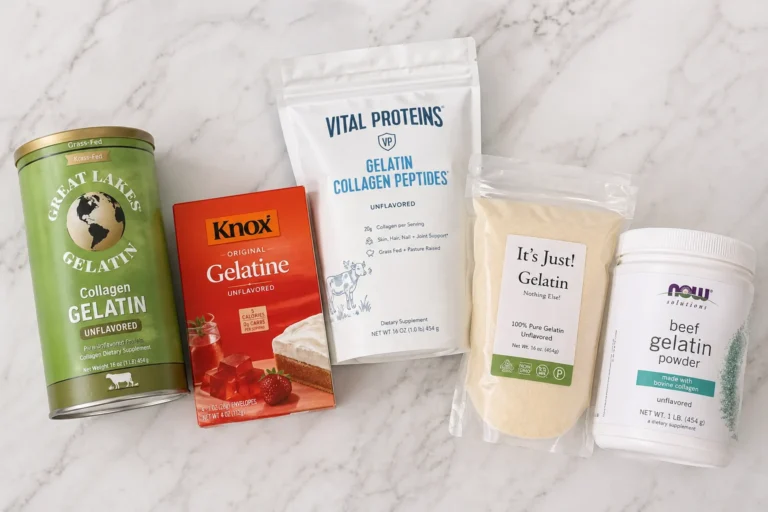
Stir 1 tablespoon (about 7 grams) of unflavored gelatin into hot broth to add about 6 grams of protein, or add a scoop of collagen peptides for about 10 grams. Our guide to gelatin benefits covers how to bloom and dissolve it properly.
4. Turn broth into a complete meal
- Egg drop soup: whisk two eggs into simmering broth for 12 more grams of complete protein.
- Chicken and rice soup: add shredded chicken to reach 25 to 30 grams per bowl.
- Tofu and miso broth: adds plant protein and fermented flavor.
- Cook grains in broth: rice or quinoa absorbs flavor and a small amount of protein.
- Add beans or lentils: fiber plus protein for a very filling bowl.
How to Read a Bone Broth Label
- To check how much protein is in bone broth on a carton, start with the serving size. Many cartons list 1 cup, but some count 2 servings in a container.
- Compare protein per serving, not per container.
- Look at sodium: it can range from 70 to over 800 mg per cup.
- Check the ingredients: bones, water, vegetables and herbs are ideal. Avoid long lists of flavorings and fillers.
- Be skeptical of claims about “collagen” without a protein number on the label.
- Compare price per gram of protein if you are buying it mainly for protein.
For the highest protein per dollar, compare bone broth with other options such as eggs, canned tuna and cottage cheese. Ideas using those foods appear in our healthy snacks for weight loss and cottage cheese breakfast bowls.
Frequently Asked Questions About How Much Protein Is in Bone Broth
How much protein is in a cup of bone broth?
Quality homemade or bottled bone broth usually contains about 6 to 10 grams of protein per cup. Regular canned broth has only 1 to 3 grams, while concentrated products and powders can have 10 to 20 grams per serving.
Is bone broth high in protein?
It is moderate: how much protein is in bone broth works out to about 1 to 1.5 eggs per cup. Per calorie it is a good source, but per serving it is much lower than chicken, fish, Greek yogurt or cottage cheese.
Does homemade bone broth have more protein than store-bought?
It can, if you use plenty of bones and connective tissue and simmer long enough. Homemade broth that gels is often richer than commercial versions, but quality bottled broth can match it.
Is the protein in bone broth good for building muscle?
Not very. It is mostly collagen-derived protein, which is low in tryptophan and other essential amino acids. Use it as a supplement to complete proteins, not as your main source.
How can I increase the protein in bone broth?
Use more bones and less water, simmer longer, reduce the broth, stir in gelatin or collagen peptides, or add eggs, chicken, tofu or beans to turn it into a meal.
Is bone broth protein powder better than liquid broth?
It is more concentrated, with 15 to 20 grams per scoop, and more convenient. Liquid broth is a whole food with fluid and flavor. Choose based on your goal and check ingredients and sodium.
Final Thoughts on How Much Protein Is in Bone Broth
Now you know how much protein is in bone broth: usually 6 to 10 grams per cup for the good stuff, much less for regular broth, and up to 20 grams for powders. It is a helpful, low-calorie addition that is easy to digest, but it is not a high-protein food on its own and it is not a complete protein. Use it to add warmth, hydration and a little extra protein, and build your meals around eggs, fish, poultry, dairy or legumes.
This article is for general information and is not medical advice. Protein needs vary. If you have kidney disease, are pregnant, or follow a medically supervised diet, talk to a healthcare professional before changing your protein intake.