Collagen vs Bone Broth: 7 Surprising Differences (Best Guide)
Collagen vs bone broth is one of the most common supplement questions: both are marketed for joints, skin and gut health, both come from collagen-rich animal parts, and both are cheaper and simpler than most wellness trends. But they are not the same product, and the best choice depends on what you want, your budget and how much cooking you are willing to do.
This guide compares collagen vs bone broth head to head: what each one actually contains, how much protein and collagen you really get, what the research supports, how they differ in cost and convenience, and which one to choose. If you want the full story on each individual product, see our deep dives on bone broth benefits and gelatin vs collagen peptides.
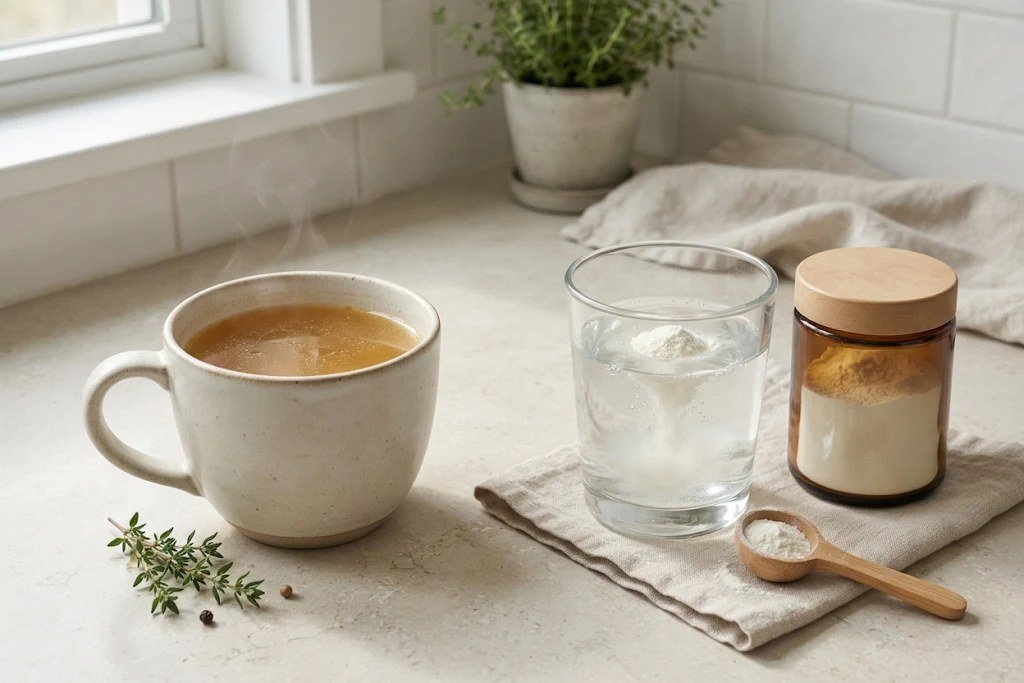
Table of Contents
Table of Contents
Collagen vs Bone Broth: Key Takeaways
- Collagen peptides are concentrated: a typical scoop gives 10 to 20 grams of collagen protein, in a precise, consistent dose.
- Bone broth is a food: a cup usually provides 5 to 10 grams of mixed protein, plus fluid, minerals and flavor, but the amount varies a lot.
- Most skin and joint trials use collagen peptides, not bone broth, so the evidence is stronger for powders.
- Bone broth wins for comfort, hydration and cooking, and it fits easily into soups and sauces.
- Both are incomplete proteins: they lack tryptophan, so neither replaces eggs, meat, dairy or legumes.
- You can use both: many people drink broth in the evening and stir collagen into coffee in the morning.
What Is Collagen? What Is Bone Broth?
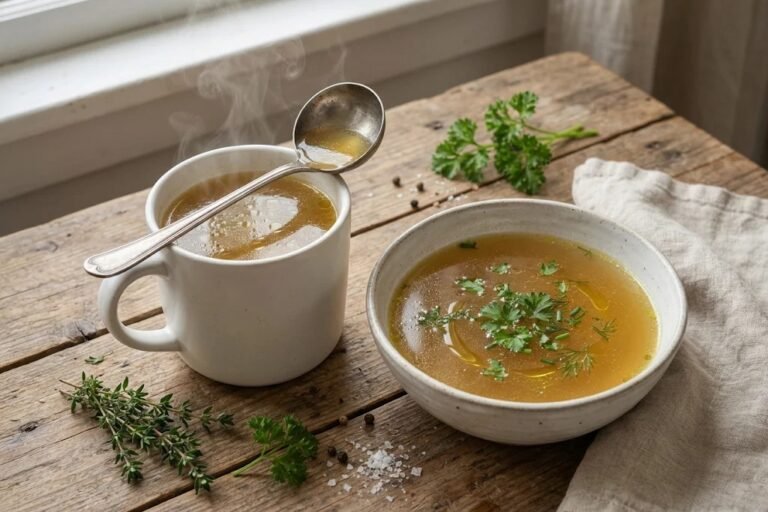
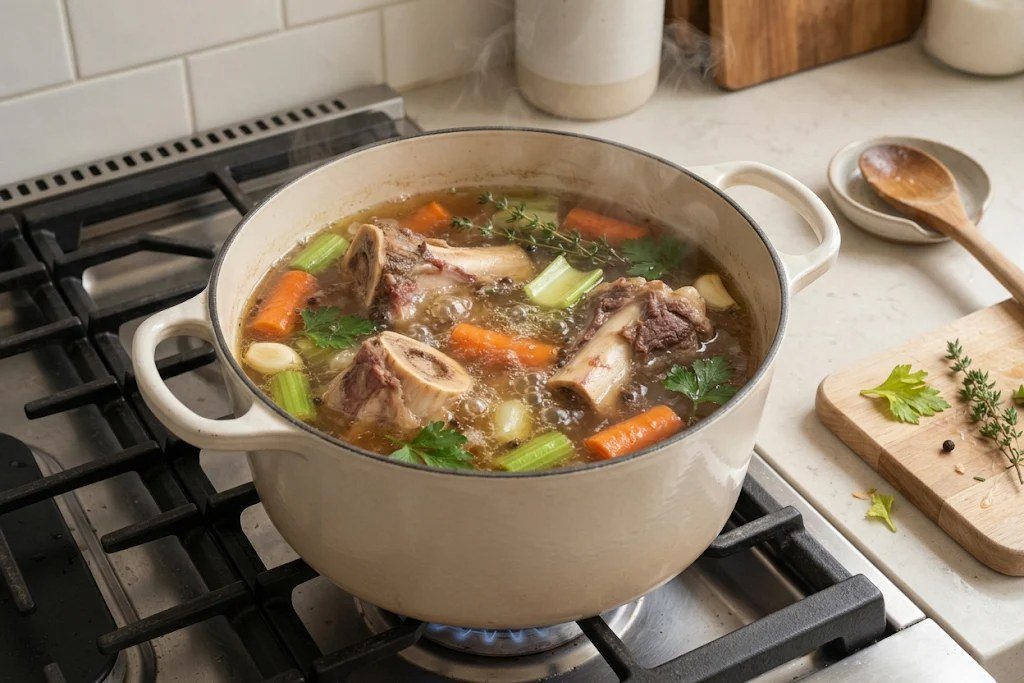
Collagen is the main structural protein in skin, tendons, bones and cartilage. When you cook animal bones, skin and connective tissue in water for hours, some collagen breaks down into gelatin, which dissolves into the liquid. That is bone broth: a flavorful, mineral-containing liquid with a variable amount of gelatin, amino acids and fat.
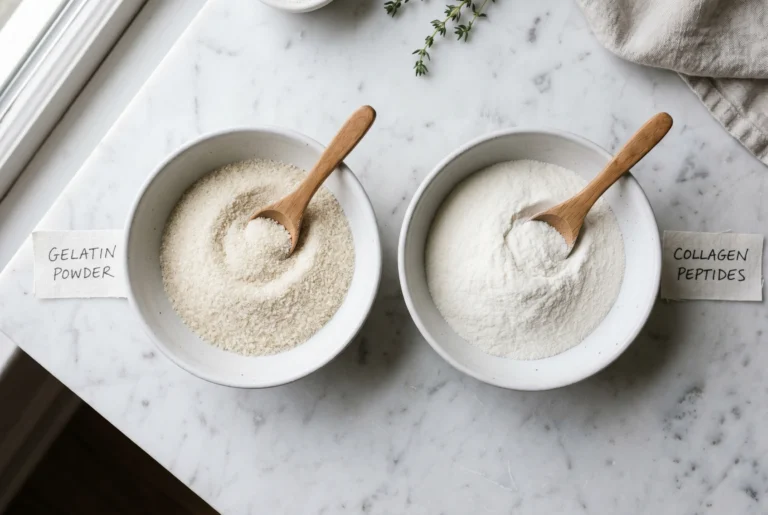
Collagen peptides (also called hydrolyzed collagen or collagen hydrolysate) are made differently. Manufacturers break collagen from bovine hides, fish skin or chicken cartilage into short chains of amino acids using enzymes, then dry it into a powder that dissolves in hot or cold drinks without gelling. The result is almost pure protein, with no flavor and no fat.
Collagen vs Bone Broth Compared Side by Side
| Feature | Collagen peptides | Bone broth |
|---|---|---|
| Form | Powder, capsules or liquid | Liquid (homemade, boxed, frozen or powdered) |
| Protein per serving | 10 to 20 g (about 1 to 2 scoops) | About 5 to 10 g per cup, varies widely |
| Collagen/gelatin amount | Precise and consistent | Variable: depends on bones, time and ratio |
| Calories | About 35 to 70 | About 30 to 80 per cup |
| Other nutrients | Few, sometimes added vitamin C | Some minerals, electrolytes and fat; sodium varies |
| Taste | Neutral, dissolves in anything | Savory, best as a drink or in cooking |
| Convenience | Very high (stir and drink) | Lower unless you buy ready-made |
| Cost per 10 g of protein | Usually moderate | Cheap if homemade, expensive if premium bottled |
| Research | Skin, joints and bone density trials exist | Little direct research on bone broth itself |
| Suitable for vegetarians | No | No |
The most important row is the second one. Because broth varies so much, it is hard to know how much collagen you are really getting from any given cup. Powders, in contrast, deliver the same dose every time, which is why researchers prefer them. For more on that comparison, see our article on gelatin vs collagen peptides.
Collagen vs Bone Broth: Protein and Nutrition
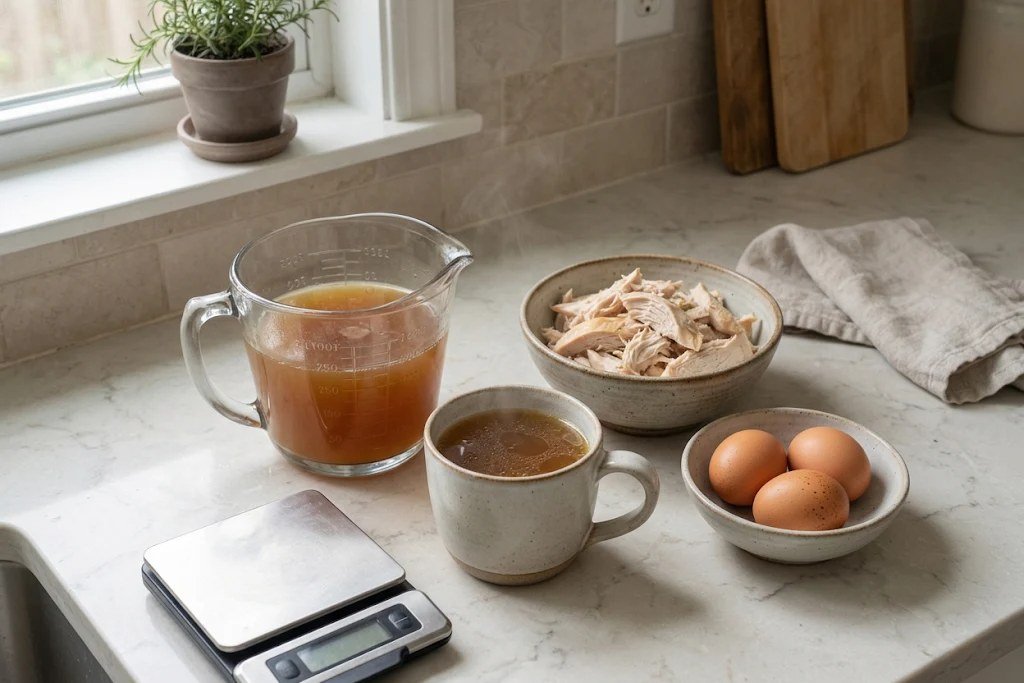
Protein is where the biggest gap appears. A typical scoop (about 11 grams) of collagen peptides contains roughly 10 grams of protein for about 40 calories. A cup of bone broth contains somewhere between 5 and 10 grams for homemade or high-quality commercial brands, but regular stock or canned broth may have only 1 to 3 grams. If protein is your main goal, collagen peptides are the more reliable and concentrated choice. We cover the exact numbers in our guide on how much protein is in bone broth.
Neither source is a complete protein. Collagen is rich in glycine, proline and hydroxyproline but has almost no tryptophan and little of several other essential amino acids. That means you should count it as partial protein and still eat complete sources such as eggs, fish, meat, dairy or beans. Our list of high protein breakfast ideas shows how to build those meals. For the nutrient content of specific foods, you can check USDA FoodData Central, and MedlinePlus overview of dietary proteins explains protein basics.
What the Research Says About Collagen vs Bone Broth
Skin
Several randomized trials suggest that 2.5 to 10 grams of collagen peptides a day for 8 to 12 weeks can modestly improve skin elasticity and hydration. You can browse randomized trials of collagen peptides and skin elasticity to see the studies. There are no good trials showing that drinking bone broth does the same, although it supplies similar amino acids.
Joints
Trials in athletes and people with knee osteoarthritis suggest 10 to 15 grams of collagen peptides a day can reduce pain a little, usually over 12 to 24 weeks. Bone broth has not been tested in the same way. The effect for collagen powder is real but modest.
Gut health
Bone broth is popular for gut health because it contains glycine and glutamine, but the research is mostly laboratory-based or anecdotal. The same is true for collagen powder. Both are gentle on the stomach and easy to digest, but neither has been proven to heal a damaged gut lining. For foods with better evidence, see our gut healthy foods list.
Muscle and weight management
Collagen is not a good muscle-building protein by itself because of its amino acid profile. Both options can help increase protein intake and fullness at low calories, as covered in our guide to healthy snacks for weight loss, but if muscle is the goal, prioritize whey, eggs, dairy, meat or soy.
Pros and Cons of Collagen vs Bone Broth
| Pros | Cons | |
|---|---|---|
| Collagen peptides | Consistent dose; easy; neutral taste; best research; good for coffee, smoothies and oatmeal | Processed supplement; cost adds up; quality varies; not vegetarian |
| Bone broth | Whole food; hydrating; comforting; cheap if homemade; versatile in cooking | Protein varies; time-consuming to make; can be high in sodium; little direct research |
Safety and Side Effects
Both are considered safe for most people in food-level amounts. Collagen supplements can cause mild digestive upset, a lingering taste or a feeling of fullness. Broth, especially store-bought, can be high in sodium, which matters if you have high blood pressure or kidney disease. One small study found measurable lead in some homemade chicken broths made from bones, so using bones from good-quality sources and variety in your diet is sensible, although typical amounts are low.
- Allergies: many collagen powders come from fish, shellfish-derived sources or eggshell membrane. Check labels.
- Kidney disease: ask your doctor before taking any protein supplement.
- Histamine intolerance: long-simmered broth is high in histamine and can cause symptoms in sensitive people.
- Pregnancy and medical conditions: talk to your provider before adding supplements.
- Quality: choose products with third-party testing, and avoid those making dramatic claims.
Collagen vs Bone Broth: Which Is Best for Your Goal?
The right answer in the collagen vs bone broth question depends on what you are trying to achieve. Use the table below as a quick decision guide, then fine-tune with your budget and taste.
| Your goal | Better choice | Why |
|---|---|---|
| Skin elasticity and hydration | Collagen peptides | Most trials used 2.5 to 10 g a day |
| Joint comfort during exercise | Collagen peptides | Best evidence at 10 to 15 g a day |
| A warm, soothing drink when you feel unwell | Bone broth | Hydrating, salty and easy to digest |
| Adding flavor and body to soups and sauces | Bone broth | Cooking ingredient first, supplement second |
| Lowest cost | Homemade bone broth | Bones are inexpensive and can be reused for stock |
| Busy schedule or travel | Collagen peptides | Portable and needs no cooking |
| Lowest sodium | Collagen peptides or low-sodium broth | Powders contain virtually no salt |
| Hydration and electrolytes after sweating | Bone broth | Contains fluid and sodium |
Does cost make a difference?
A tub of collagen peptides typically costs between 0.50 and 1.50 dollars per 10-gram serving, depending on brand and quality. Ready-made bottled bone broth is often priced similarly per cup but delivers less measurable collagen. Homemade broth is the cheapest of all, since a few pounds of bones can produce several quarts, but it takes hours of simmering. Over a month, the collagen vs bone broth cost difference is small, so base your decision on convenience and enjoyment rather than price alone.
Whichever you pick, give it enough time. Studies on collagen typically lasted at least eight weeks, and any change in skin or joints is gradual. Take photos or note your symptoms at the start, then compare after two or three months. If you notice no difference, you have lost very little, and you can stop with no harm done.
How to Choose Between Collagen and Bone Broth
- If you want a measured dose for skin or joints, choose collagen peptides: 10 grams a day for at least 8 to 12 weeks.
- If you want a warm, comforting drink or a base for cooking, choose bone broth.
- If you have limited time, a powder is easier. If you enjoy cooking, make broth and gelled stock on the weekend. See our guide on how to make bone broth at home.
- If you are watching sodium, choose low-sodium broth or make your own.
- If you want the best of both, drink broth for flavor and fluids and add a scoop of collagen peptides to coffee or oatmeal.

How to Combine Collagen and Bone Broth
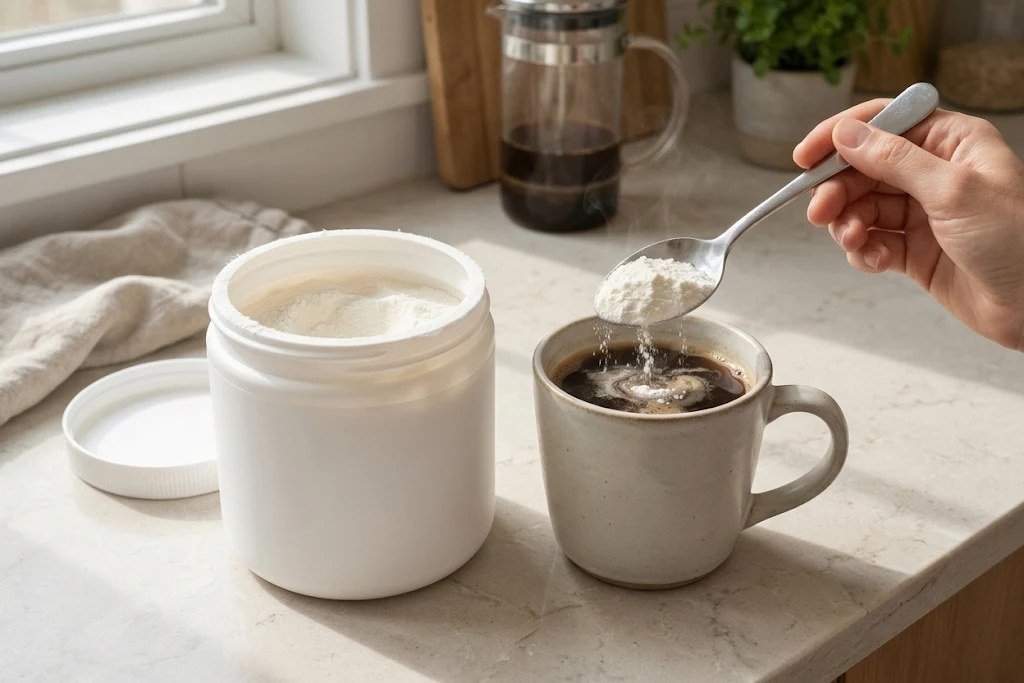
You do not have to choose. A practical routine is a mug of broth with dinner or as a snack, and one scoop of collagen peptides in morning coffee or oatmeal. To boost the protein in homemade broth, add a tablespoon of unflavored gelatin, which is explained in our gelatin benefits guide, or stir in a scoop of collagen powder after cooking. Do not add collagen powder before simmering, because heat for hours is unnecessary and wastes it.
Frequently Asked Questions About Collagen vs Bone Broth
Is collagen or bone broth better?
Collagen peptides are better if you want a precise, concentrated dose of protein for skin or joint studies. Bone broth is better if you want a hydrating, flavorful whole food. For most people the difference is small, so choose the one you will use consistently.
Does bone broth have as much collagen as a supplement?
Usually not. A scoop of collagen peptides gives 10 to 20 grams of collagen protein, while a cup of broth gives about 5 to 10 grams of mixed protein in total, and the amount varies widely with how it was made.
Can I take collagen and drink bone broth every day?
For most healthy adults, yes. There is no known harm from combining them in food-level amounts, but watch your sodium and total protein, and check with a doctor if you have kidney disease or take medication.
Does bone broth help skin more than collagen?
There is no evidence that it does. Skin trials used collagen peptides. Bone broth supplies similar amino acids, so it may help in a general way, but this is not proven.
Is collagen from bone broth absorbed?
Collagen is broken down into amino acids and small peptides during digestion, and some peptides are absorbed. Whether those specific peptides end up in your skin or joints is not fully proven, for either broth or supplements.
When is the best time to take collagen?
There is no proven best time. Take it whenever you will remember, for example in morning coffee. Consistency over at least 8 to 12 weeks matters more than timing.
Final Thoughts on Collagen vs Bone Broth
In the collagen vs bone broth debate, the honest answer is that they do different jobs. Collagen peptides are the better-studied, more precise and more convenient option, while bone broth is a comforting, hydrating food with variable nutrition. Pick based on your goal, your budget and your lifestyle, keep your expectations realistic and remember that neither can replace a varied diet with plenty of complete protein.
This article is for general information and is not medical advice. Talk to a healthcare professional before starting any supplement, especially if you have a medical condition, are pregnant or take medication.