
How to Make Bone Broth at Home (Stovetop, Slow Cooker & Instant Pot)
Learning how to make bone broth at home takes about 15 minutes of work and a few hours of simmering. Homemade bone broth costs a fraction of store-bought, tastes far better, and lets you control the salt. It also turns leftover bones into something worth eating. The method is simple: roast the bones, cover them with cold water and vegetables, and simmer low and slow. The part most recipes skip is the details that decide whether you end up with a golden, jiggly, rich broth or a thin, greasy, cloudy one.
Related reading: how much protein is in bone broth by type, and collagen vs bone broth.
This guide gives you a reliable recipe plus three ways to cook it: stovetop, slow cooker and Instant Pot. You will also find the right amount of bones, exact simmer times, the “gel test”, safe cooling and storage, and fixes for every common problem. If you want to know whether bone broth is worth the effort, read our honest guide to the benefits of bone broth first.
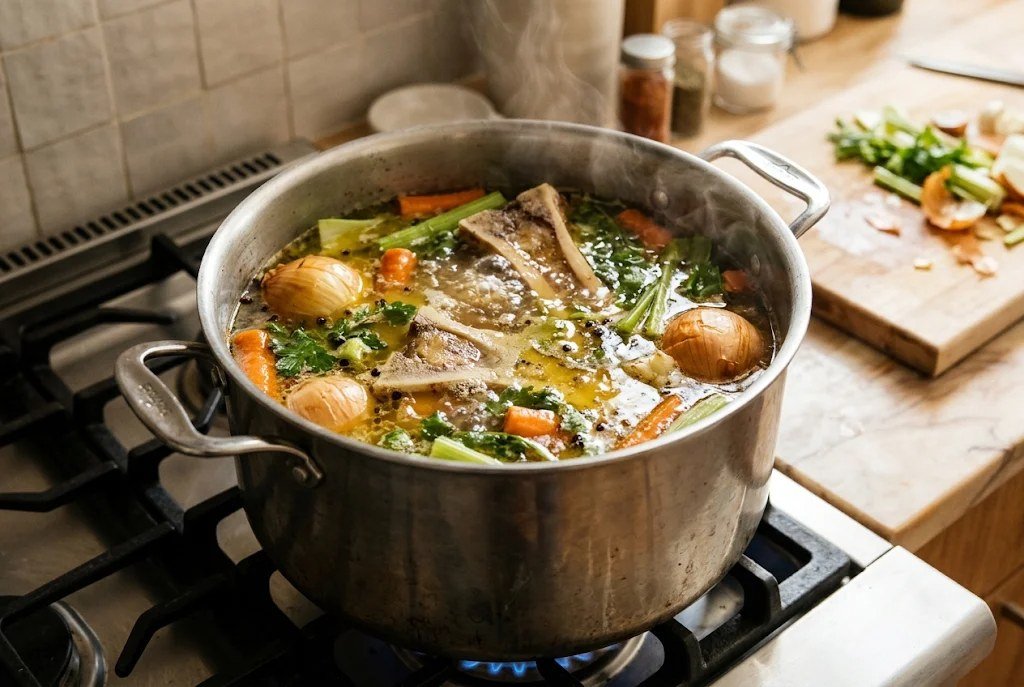
Table of Contents
Table of Contents
How to Make Bone Broth at Home: Key Takeaways
- Here is how to make bone broth at home: roast 3 to 4 pounds of bones, cover them with cold water and simmer gently.
- Knowing how to make bone broth at home on the stovetop, in a slow cooker or in an Instant Pot lets you choose the method that fits your day.
- The simmer time for how to make bone broth at home is 8 to 12 hours for chicken and 12 to 24 hours for beef.
- A good test for how to make bone broth at home is the gel test: chill a spoonful and see if it sets.
- Learning how to make bone broth at home safely includes cooling it quickly and refrigerating it within 2 hours.
- Fixing problems is part of how to make bone broth at home, from cloudy broth to broth that will not gel.
- Freeze single-cup portions so that how to make bone broth at home becomes a once-a-month task.
How to Make Bone Broth at Home: Recipe at a Glance
- Yield: about 3 quarts (10 to 12 cups)
- Active time: 15 minutes
- Cook time: about 12 to 24 hours on the stovetop or in a slow cooker, or about 2 hours in a pressure cooker
- Bones: 3 to 4 pounds (1.4 to 1.8 kg), preferably a mix of meaty and collagen-rich bones
- Water: about 4 quarts (4 liters), cold
- Storage: 3 to 4 days in the fridge, up to 6 months in the freezer
Which Bones Are Best for Bone Broth?
The best broth comes from a mix of bones. Collagen-rich bones (joints, feet, knuckles, necks) give body and a good gel. Meaty bones give flavor. Marrow bones add richness. Choose one animal or combine them.
- Beef: knuckles, marrow bones, oxtail, short ribs and neck bones. Beef gives a deep, rich flavor.
- Chicken: carcasses, necks, backs, wings and especially feet, which are rich in collagen. Chicken broth is lighter and quicker.
- Pork: trotters, neck bones and ham hocks make a savory, gel-rich broth.
- Leftovers: a roast chicken carcass works well. Freeze bones in a bag as you collect them until you have enough.
A butcher counter or farmers market is the best place to buy soup bones, and they are often inexpensive. Ask for a mix of joints and meaty bones. Use fresh or frozen bones from a source you trust.
How to Make Bone Broth at Home: Ingredients and Equipment
- 3 to 4 lb (1.4 to 1.8 kg) beef, chicken or pork bones
- 2 tablespoons apple cider vinegar (optional but traditional)
- 2 carrots, 2 celery ribs, 1 large onion (quartered, skin on for color)
- 1 head of garlic, halved crosswise
- 2 bay leaves, 1 teaspoon black peppercorns and a handful of parsley stems
- About 4 quarts (4 L) cold, filtered water
- Salt, to taste at the end
Equipment: a large stockpot (at least 8 quarts), a slow cooker or an Instant Pot, a fine mesh sieve, a large bowl or second pot, a ladle and airtight containers or jars for storage.

Homemade Bone Broth
Ingredients
Method
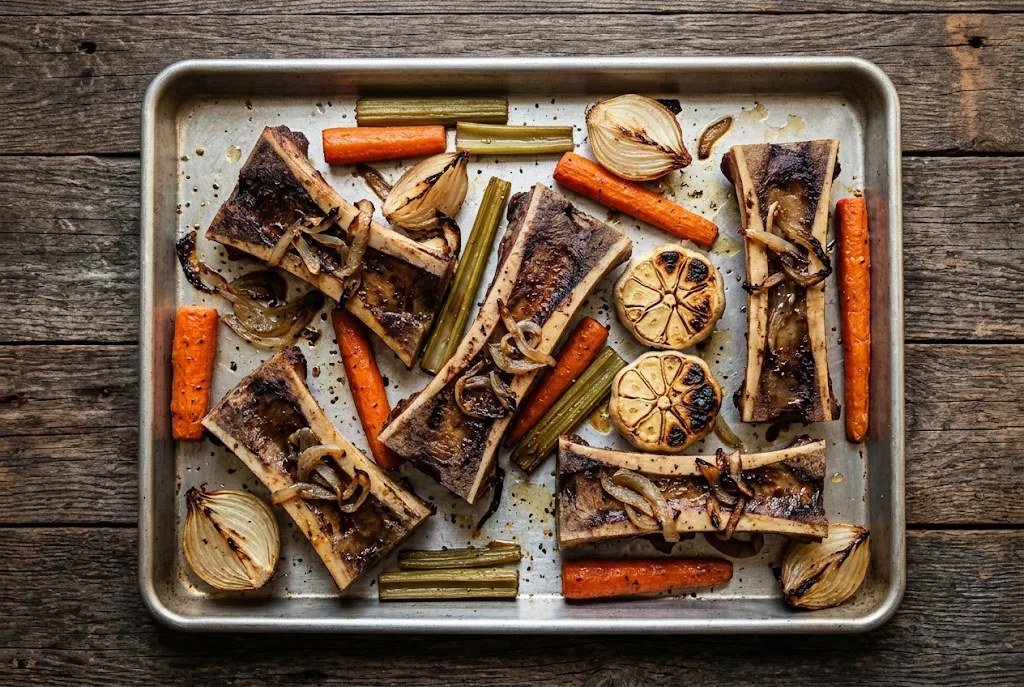
- Roast the bones, carrots, celery, onion and garlic on a large sheet pan at 425°F (220°C) for 30 to 45 minutes, turning once, until deeply browned. (Optional for chicken.)
- Transfer everything to a large stockpot, slow cooker or pressure cooker. Add the vinegar, bay leaves, peppercorns and parsley stems and cover with cold water by about 2 inches.
- Stovetop: bring slowly to a gentle simmer, skim the foam during the first hour, and simmer partly covered for 8 to 12 hours (chicken) or 12 to 24 hours (beef or pork). Slow cooker: cook on low for 12 to 18 hours. Instant Pot: cook at high pressure for 60 to 120 minutes and release naturally.
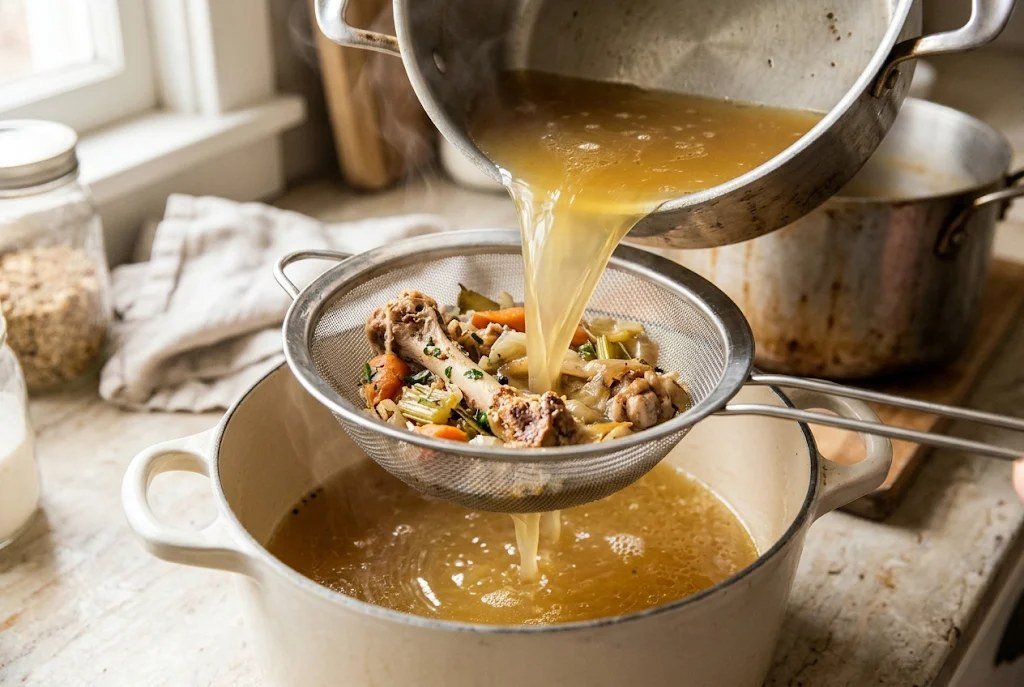
- Remove the large bones with tongs and strain the broth through a fine mesh sieve into a clean pot. Discard the bones and vegetables.
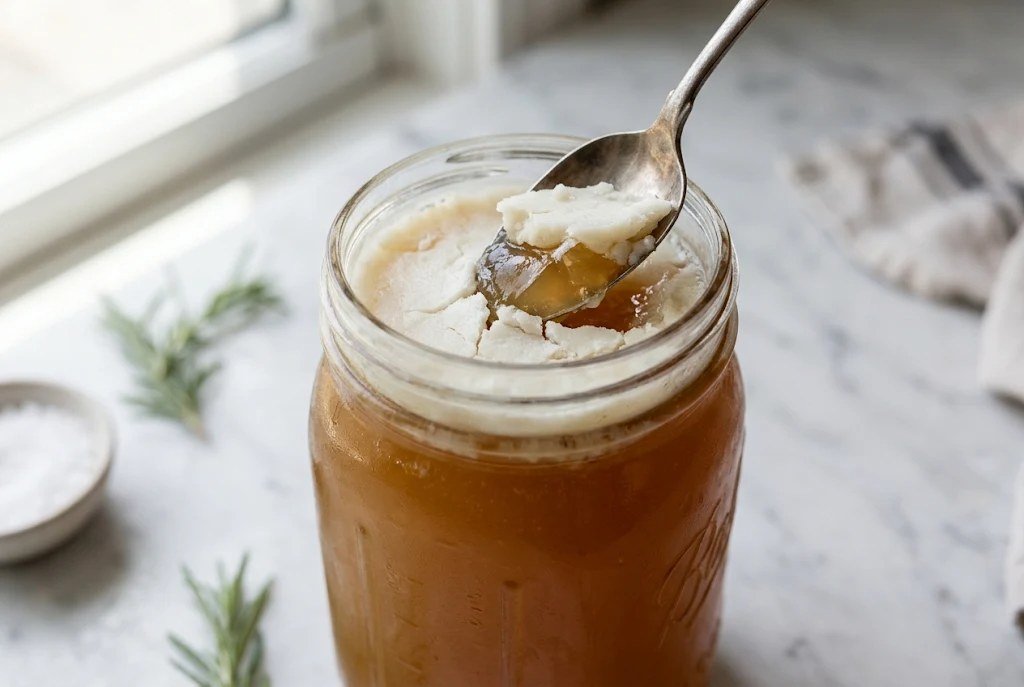
- Cool quickly in an ice bath or shallow containers, then refrigerate overnight. Lift off the solid layer of fat from the top.
- Reheat and season with salt to taste before drinking. Store in the fridge for 3 to 4 days or freeze in 1-cup portions for up to 6 months.
Notes
How to Make Bone Broth at Home on the Stovetop
Step 1: Roast the bones and vegetables
Roasting is optional for chicken but gives beef and pork a deeper color and flavor. Spread the bones, carrots, celery, onion and garlic on a large sheet pan. Roast at 425°F (220°C) for 30 to 45 minutes, turning once, until the bones are deeply browned but not burned.
Step 2: Cover with cold water
Transfer everything to a large stockpot. Add the vinegar, bay leaves, peppercorns and parsley stems, then cover with about 4 quarts of cold water, enough to cover the bones by 2 inches. Starting with cold water helps proteins release slowly, which gives a clearer broth. Let the pot sit for 30 minutes if you have time.
Step 3: Bring to a gentle simmer and skim
Bring the pot slowly to a boil over medium-high heat, then immediately reduce to the lowest heat that keeps tiny bubbles breaking the surface. A hard boil makes broth cloudy. During the first hour, skim off the gray foam that rises to the top with a spoon.
Step 4: Simmer
Partially cover the pot and simmer. Add hot water if the level drops below the bones. Use the table below for timing. Do not salt the broth yet.
Step 5: Strain
Remove the large bones with tongs, then pour the broth through a fine mesh sieve into a clean pot or large bowl. Discard the bones and vegetables.
Step 6: Cool quickly and skim the fat
Cool the broth quickly: place the pot in an ice bath in the sink, or divide it into shallow containers. Refrigerate overnight. The next day, a layer of fat will have solidified on top. Lift it off with a spoon. Reheat and salt to taste before drinking.
How Long to Simmer Bone Broth
Longer is not always better. Bones give up most of their collagen and flavor over a sensible window, and extremely long cooking can make broth taste flat or strong. Use these times as a guide:
| Bones | Stovetop or slow cooker (low) | Instant Pot or pressure cooker |
|---|---|---|
| Chicken (carcass, wings, feet) | 8 to 12 hours | 60 to 90 minutes at high pressure |
| Beef or pork (knuckles, marrow bones, trotters) | 12 to 24 hours | 90 to 120 minutes at high pressure |
| Mixed bones | 12 to 18 hours | 2 hours at high pressure |
Pressure cookers produce smaller batches, so scale the recipe to fit (most bone broth recipes call for filling the pot only two-thirds). Allow a natural pressure release for 20 to 30 minutes, then strain.
How to Make Bone Broth at Home in a Slow Cooker
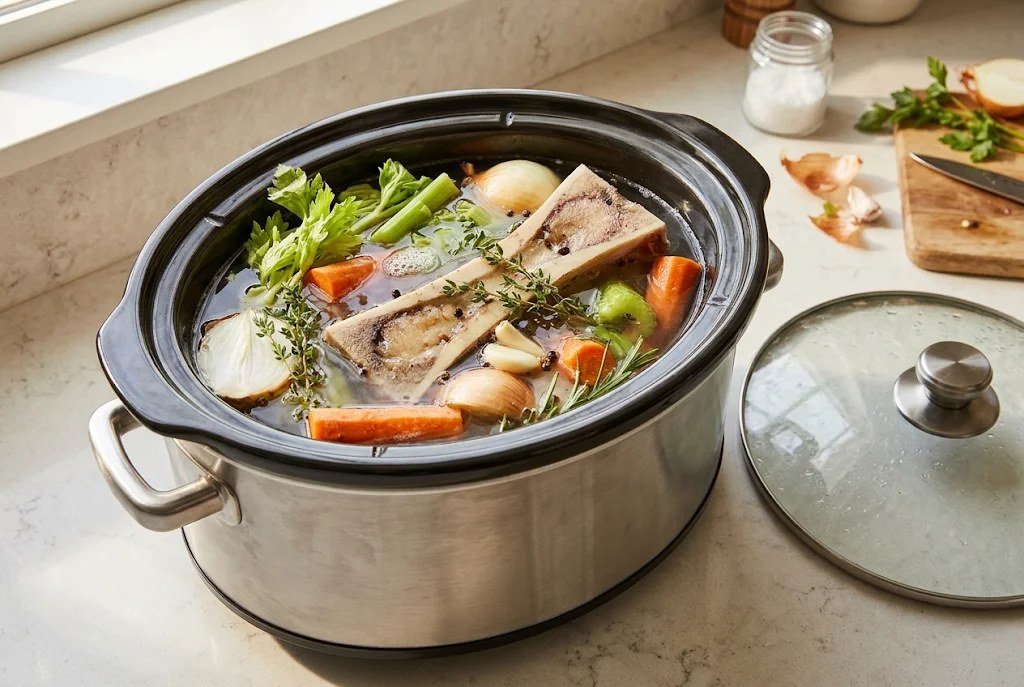
The slow cooker is the easiest method if you want to leave the broth overnight. Roast the bones if you like, add everything to the slow cooker, cover with water up to the fill line (leave an inch of space), and cook on low for 12 to 18 hours. Strain, cool and skim as above. It uses less energy than a stovetop pot and avoids leaving a flame unattended.
How to Make Bone Broth at Home in an Instant Pot
For a quick version, add the bones, vegetables, vinegar and water (do not go past the max fill line) to the pressure cooker, seal and cook at high pressure for 90 to 120 minutes. Let the pressure release naturally, then strain. The result is slightly less rich than a 24-hour broth but is ready in an afternoon.
How to Tell When Your Bone Broth Is Done
- The gel test. Ladle a few tablespoons into a small cup and refrigerate for 30 minutes. If it sets to a soft jelly, you have extracted plenty of collagen. If it stays liquid, it is still a delicious broth, just lighter.
- Taste. It should taste rich and savory, not watery. If it tastes thin, simmer it uncovered for another hour to reduce it.
- Bones. The joints should be soft and the bones may crumble easily.
Safe Cooling and Storage
Homemade broth is a perfect medium for bacteria if it sits warm too long, so cool it quickly. The USDA food safety guidance on leftovers recommends refrigerating cooked food within 2 hours. Use shallow containers or an ice bath to speed the process.
- Refrigerator: 3 to 4 days in a covered container.
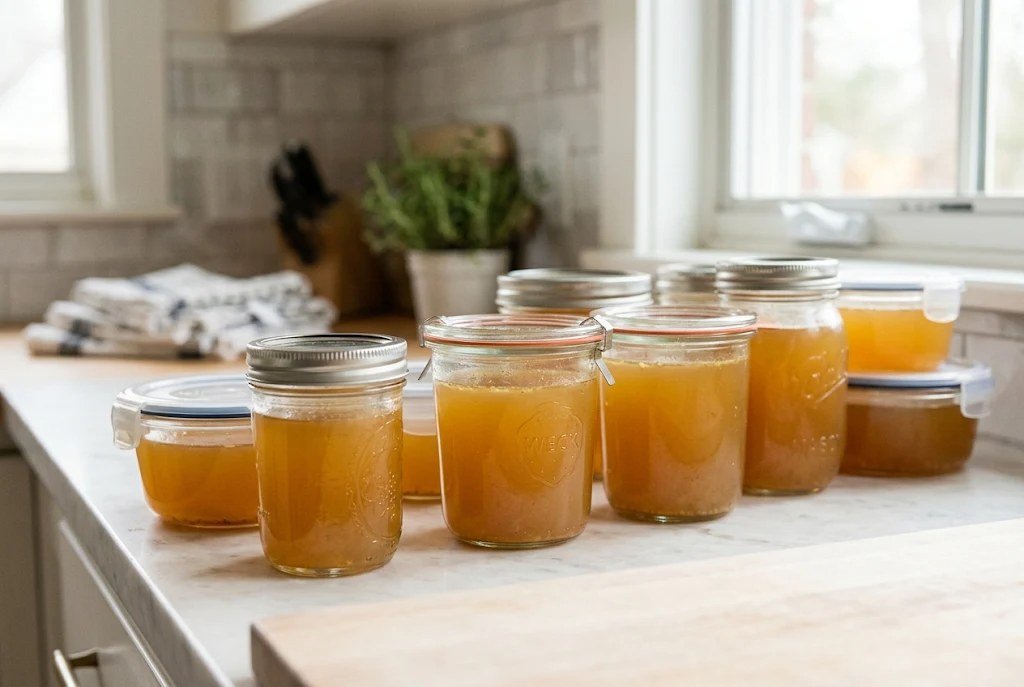
- Freezer: up to 6 months for best quality. Freeze in 1-cup portions in jars (leave an inch of headspace so they do not crack), silicone molds or zip bags laid flat.
- Reheating: bring to a rolling boil and then reduce to a simmer. Do not reheat more than once.
- Canning: broth is low-acid, so it must be pressure-canned if you want to shelf-store it. Never water-bath can it.
How to Make Bone Broth at Home: Troubleshooting
My broth did not gel
This is the most common worry, and it is usually not a problem. Common causes are too much water, too few collagen-rich bones, or too short a cooking time. Next time use less water, add chicken feet, knuckles or trotters, and keep the ratio around 1 pound of bones per quart of water. A broth that does not gel is still safe and tasty.
My broth is cloudy
A hard boil or stirring emulsifies fat and bits of protein. Simmer gently, skim in the first hour and strain through a fine sieve or cheesecloth.
My broth is greasy
Chill it overnight and lift off the solid fat. Beef and pork bones produce more fat than chicken.
It tastes bland or watery
Simmer uncovered for an hour or two to reduce and concentrate it, then season with salt at the end. Roasting the bones and onions first also adds depth.
It tastes bitter or sour
Burnt roasted bits, too many cruciferous vegetables, or too much vinegar can cause this. Roast just until browned and skip cabbage, broccoli and kale in the pot.
Flavor Variations
- Ginger turmeric: add a 2-inch piece of sliced ginger and 1 teaspoon of turmeric for the last hour.
- Asian-style: add ginger, a star anise, scallion whites and a splash of soy sauce when serving.
- Herby: add thyme, rosemary and parsley for the last 30 minutes.
- Roasted garlic and mushroom: add dried mushrooms for a deeper savory note.
Does Vinegar Matter?
Many recipes add a splash of apple cider vinegar on the theory that acid helps pull minerals from the bones. The effect is small, and broth made without it is perfectly good. It is a traditional step you can include or skip.
What to Do with Bone Broth
Sip it warm, use it for soup, cook grains in it, add it to sauces and gravies, or freeze it into cubes for quick flavor. For the pros and cons of making it a daily habit, see our guide to bone broth benefits. And if you are looking for other protein-rich, make-ahead recipes, try our high protein breakfast ideas.
How to Scale the Recipe Up or Down
Keep the ratio rather than the exact amounts. Aim for roughly 1 pound of bones per quart of water, with one onion, one carrot and one celery rib for every 2 to 3 pounds of bones. If your pot is smaller, use fewer bones and less water instead of crowding it. If you are using a pressure cooker, fill it only two-thirds full and follow the maximum fill line in your manual.
Common Bone Broth Mistakes to Avoid
- Boiling hard. A rolling boil clouds the broth and can make it taste harsh. Keep it at a bare simmer.
- Salting at the start. The broth reduces as it cooks, so early salt can leave it too salty. Season at the end, or when you use it.
- Using too much water. This is the number one reason broth fails to gel. Cover the bones, but do not drown them.
- Skipping the cold start. Starting with cold water gives a clearer broth than dropping bones into hot water.
- Adding strongly flavored vegetables. Cabbage, broccoli and kale can turn the broth bitter or sulfury.
- Cooling too slowly. Leaving a large pot of broth on the counter overnight is a food safety risk. Use an ice bath or shallow containers and refrigerate within 2 hours.
Ideas for Using Your Homemade Broth This Week
- Monday: sip a mug of warm broth with ginger and a squeeze of lemon.
- Tuesday: make a quick chicken and vegetable soup with 4 cups of broth.
- Wednesday: cook a cup of rice or quinoa in broth instead of water.
- Thursday: use a cup of broth to make a pan sauce for chicken or mushrooms.
- Friday: pour warm broth over noodles, greens and a soft-boiled egg for a fast ramen-style bowl.
Freezing in cup-sized portions makes all of this easy, because you can thaw exactly what you need in a few minutes.
Frequently Asked Questions About How to Make Bone Broth at Home
How long should you simmer bone broth?
Simmer chicken bones for 8 to 12 hours and beef or pork bones for 12 to 24 hours on the stove or slow cooker. In a pressure cooker, 60 to 120 minutes is usually enough.
Do I need to add vinegar to bone broth?
No. Many recipes add apple cider vinegar for tradition, but the effect on mineral extraction is small and broth tastes fine without it.
How much water should I use?
Cover the bones by about 2 inches, which is roughly 4 quarts of water for 3 to 4 pounds of bones. Less water gives a richer, more gelled broth.
Why did my bone broth not gel?
It usually has too much water or too few collagen-rich bones. Add joints, feet or knuckles next time and use less water. Non-gelled broth is still safe to eat.
Can I leave bone broth simmering overnight?
A slow cooker is the safest way to do this. Avoid leaving an open flame or a large pot of hot liquid unattended on the stove.
How long does homemade bone broth last?
Up to 3 to 4 days in the fridge and about 6 months in the freezer for best quality.
Can I reuse the bones for a second batch?
You can make a lighter second batch, but most collagen and flavor are extracted the first time, so the result will be weaker.
Should I roast the bones first?
Roasting is optional for chicken and recommended for beef and pork. It gives a darker, deeper-flavored broth.
Final Thoughts on How to Make Bone Broth at Home
A good bone broth is mostly about patience and a handful of simple choices: the right bones, cold water, a gentle simmer and quick cooling. Make a big batch once or twice a month, freeze it in cups, and you will always have something warm, savory and comforting on hand.





5 Comments