Cottage Cheese Breakfast Bowls: 8 Easy Sweet & Savory Ideas
These cottage cheese breakfast bowls take about 5 minutes and pack 13 to 25 grams of protein. Cottage cheese has gone from diet-food cliché to breakfast favorite, and for good reason. A half-cup serving delivers about 12 to 14 grams of protein for around 90 calories, it takes no cooking, and it works with sweet and savory toppings alike. The only real problem is knowing what to put on it so it feels like a proper meal and not a bowl of lumpy dairy.
This guide gives you 8 cottage cheese breakfast bowls, from berry and peanut butter to avocado and eggs, each with exact quantities, protein, calories and prep time. You will also find how to choose the right cottage cheese, how to make it silky smooth if you dislike the texture, storage times and answers to the most common questions. For more morning protein options, see our high protein breakfast ideas.

Table of Contents
Table of Contents
Cottage Cheese Breakfast Bowls: Key Takeaways
- Cottage cheese breakfast bowls start with 1/2 cup of cottage cheese, which provides about 12 to 14 grams of protein.
- Every one of these cottage cheese breakfast bowls takes 3 to 10 minutes and needs no cooking.
- Blend the cottage cheese for 30 to 60 seconds if you want smooth cottage cheese breakfast bowls.
- Sweet cottage cheese breakfast bowls use fruit, nut butter and honey; savory ones use eggs, avocado, tomatoes and olives.
- Cottage cheese is high in sodium, so compare labels when you build cottage cheese breakfast bowls every day.
- Store assembled cottage cheese breakfast bowls for 2 to 3 days and add crunchy toppings just before eating.
- Add eggs, Greek yogurt or smoked salmon to turn cottage cheese breakfast bowls into a larger meal.
The Basic Formula for Cottage Cheese Breakfast Bowls
Every bowl in this guide follows the same simple template. Once you know it, you can improvise with whatever is in your kitchen.
- Base: 1/2 to 3/4 cup cottage cheese (about 105 to 160 g)
- Fruit or vegetables: 1/2 cup berries, diced fruit, or a handful of tomatoes and cucumber
- Crunch: 1 to 2 tablespoons granola, nuts or seeds
- Fat or flavor: nut butter, avocado, olive oil, honey, cinnamon, herbs or black pepper
Aim for roughly 15 to 25 grams of protein per bowl. A half-cup of cottage cheese gives about 12 grams, so add a hard-boiled egg, a spoonful of nut butter or some Greek yogurt if you want a bigger breakfast.
How to Choose Cottage Cheese
- Milkfat: nonfat, 1%, 2% and 4% all work. Higher fat tastes creamier and is more filling, while lower fat has slightly more protein per calorie.
- Curd size: small curd is smoother and better for bowls. Large curd has a more rustic, chunky texture.
- Sodium: cottage cheese is often high in sodium, commonly 300 to 450 mg per half cup. Compare brands and consider a low-sodium option if you watch salt.
- Ingredients: milk, cream, salt and cultures is the classic list. Some brands add gums or stabilizers, which are safe but can change the texture.
- Lactose: cottage cheese still contains some lactose. Lactose-free versions exist if you are sensitive.
Cottage Cheese Nutrition per Half Cup
Values are approximate and based on typical figures from the USDA FoodData Central database. Check your label, because brands vary.
| Type (1/2 cup, about 113 g) | Calories | Protein | Fat | Sodium |
|---|---|---|---|---|
| Nonfat | About 70 to 80 | 12 to 14 g | 0 g | 300 to 450 mg |
| 1% milkfat | About 80 | 12 to 14 g | 1 g | 300 to 450 mg |
| 2% milkfat | About 90 | 12 g | 2.5 g | 300 to 450 mg |
| 4% milkfat (full-fat) | About 110 | 12 g | 5 g | 300 to 450 mg |
Cottage cheese also provides calcium, phosphorus and some B vitamins. Much of its protein is casein, which digests relatively slowly, one reason many people find it filling.
8 Cottage Cheese Breakfast Bowls (Sweet and Savory)
1. Berry Peanut Butter Bowl (Sweet)
About 17 g protein · about 240 calories · 3 minutes
This is the classic: creamy, a little salty, a little sweet and very filling.
- 1/2 cup cottage cheese
- 1/2 cup raspberries and blueberries
- 1 tablespoon peanut butter (warm it for 10 seconds so it drizzles)
- 1 teaspoon honey
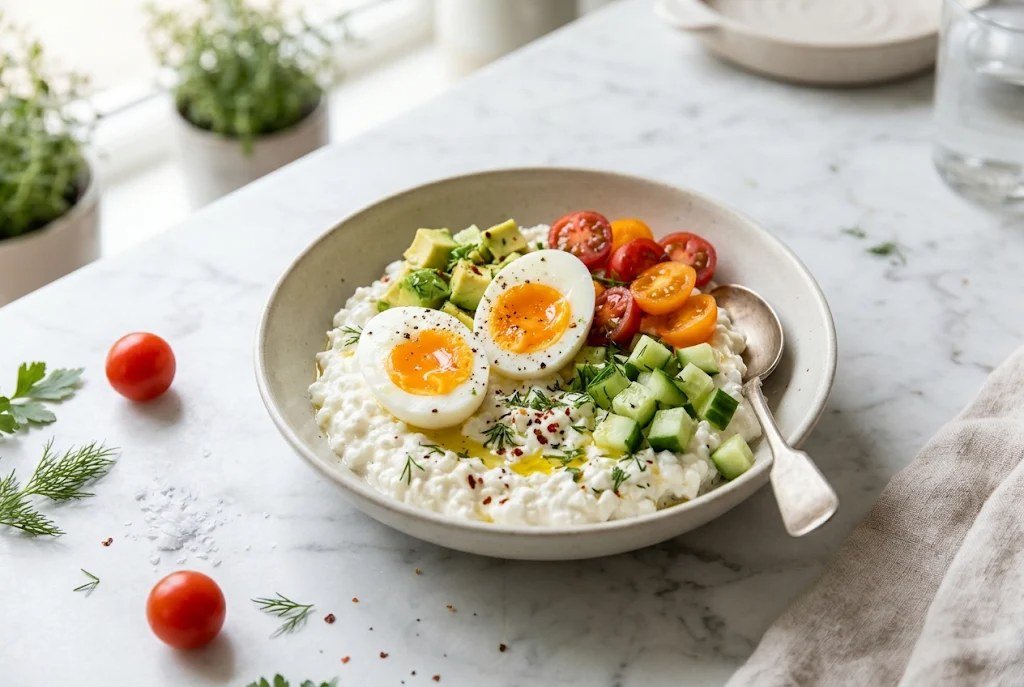
2. Avocado Egg Bowl (Savory)
About 25 g protein · about 305 calories · 10 minutes
The savory bowl is a great replacement for avocado toast. The cottage cheese gives creaminess and protein, and the eggs make it a full meal.
- 1/2 cup cottage cheese
- 2 hard-boiled or soft-boiled eggs, halved
- 1/4 avocado, diced
- 4 cherry tomatoes and a few slices of cucumber
- Black pepper, a squeeze of lemon, and chopped chives
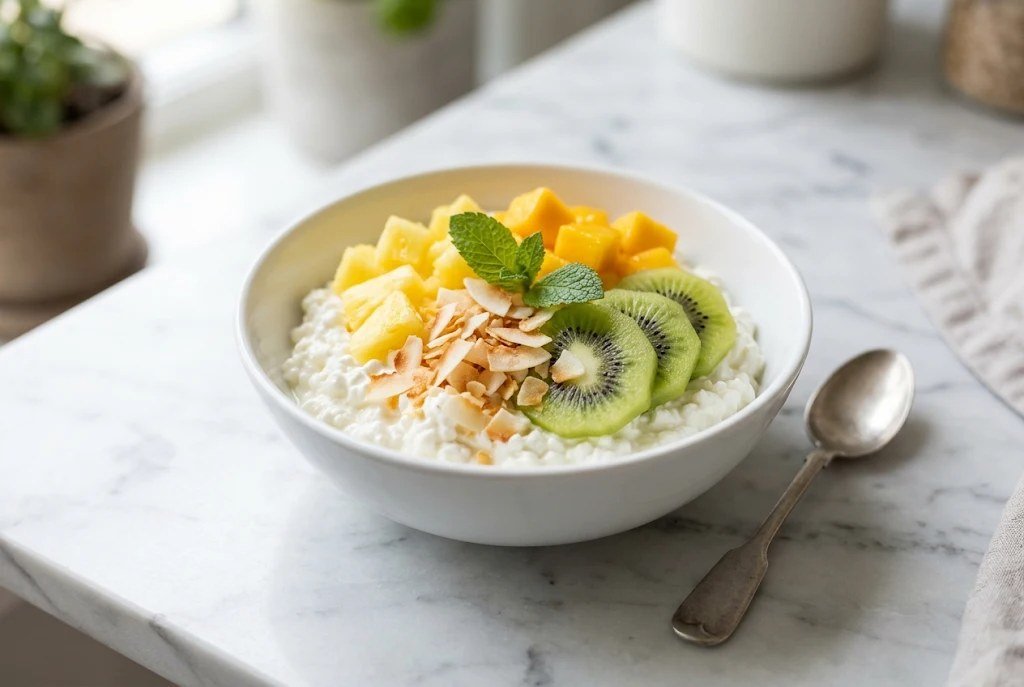
3. Tropical Bowl
About 13 g protein · about 195 calories · 5 minutes
Bright and refreshing, this works well in summer.
- 1/2 cup cottage cheese
- 1/4 cup diced pineapple and 1/4 cup mango
- 1/2 kiwi, sliced
- 1 tablespoon toasted coconut flakes
4. Apple Cinnamon Crunch Bowl
About 13 g protein · about 210 calories · 4 minutes
Think apple pie for breakfast, with far more protein.
- 1/2 cup cottage cheese
- 1/2 apple, diced
- 1 tablespoon chopped walnuts and a pinch of cinnamon
- 1 teaspoon honey or maple syrup
5. Chocolate Banana Bowl
About 17 g protein · about 260 calories · 4 minutes
Stir 1 teaspoon of unsweetened cocoa powder and 1 teaspoon of honey into the cottage cheese, then top with half a sliced banana and a tablespoon of peanut butter.
6. Whipped Cottage Cheese and Berry Bowl
About 14 g protein · about 175 calories · 5 minutes
If you dislike the texture of cottage cheese, this is the bowl for you. Blend the cottage cheese until completely smooth and it behaves like a thick, creamy yogurt.
- 1/2 cup cottage cheese, blended
- 1/2 cup sliced strawberries
- 2 tablespoons granola

7. Mediterranean Bowl (Savory)
About 13 g protein · about 170 calories · 5 minutes
Cottage cheese pairs beautifully with olive oil and herbs.
- 1/2 cup cottage cheese
- 1/4 cup cherry tomatoes and cucumber, diced
- 4 to 5 olives, chopped
- 1 teaspoon olive oil, a pinch of za’atar or oregano and a squeeze of lemon
8. Smoked Salmon Bowl (Savory)
About 22 g protein · about 165 calories · 5 minutes
This bowl has the protein of a full breakfast in under 200 calories. Smoked salmon is salty, so go easy on added salt. If you are pregnant, ask your doctor about smoked fish or use fully cooked salmon instead.
- 1/2 cup cottage cheese
- 2 ounces (about 55 g) smoked salmon
- Sliced cucumber, a few capers and fresh dill

Berry Peanut Butter Cottage Cheese Bowl
Ingredients
Method
- Spoon the cottage cheese into a bowl. For a smooth texture, blend it for 30 to 60 seconds first.
- Top with the berries.
- Drizzle with the warmed peanut butter and the honey.
- Eat right away, or cover and refrigerate for up to 2 days (add the berries just before eating).
Notes
How to Make Smooth, Whipped Cottage Cheese
The number one reason people avoid cottage cheese is the texture. Blending fixes it in under two minutes.
- Add 1 cup of cottage cheese to a small blender or food processor.
- Blend on high for 30 to 60 seconds, scraping down the sides, until completely smooth and creamy.
- For a sweeter version, add 1 teaspoon of honey and a splash of vanilla. For a savory version, add a squeeze of lemon, garlic powder and black pepper.
- Store in a sealed container in the fridge for up to 3 days.
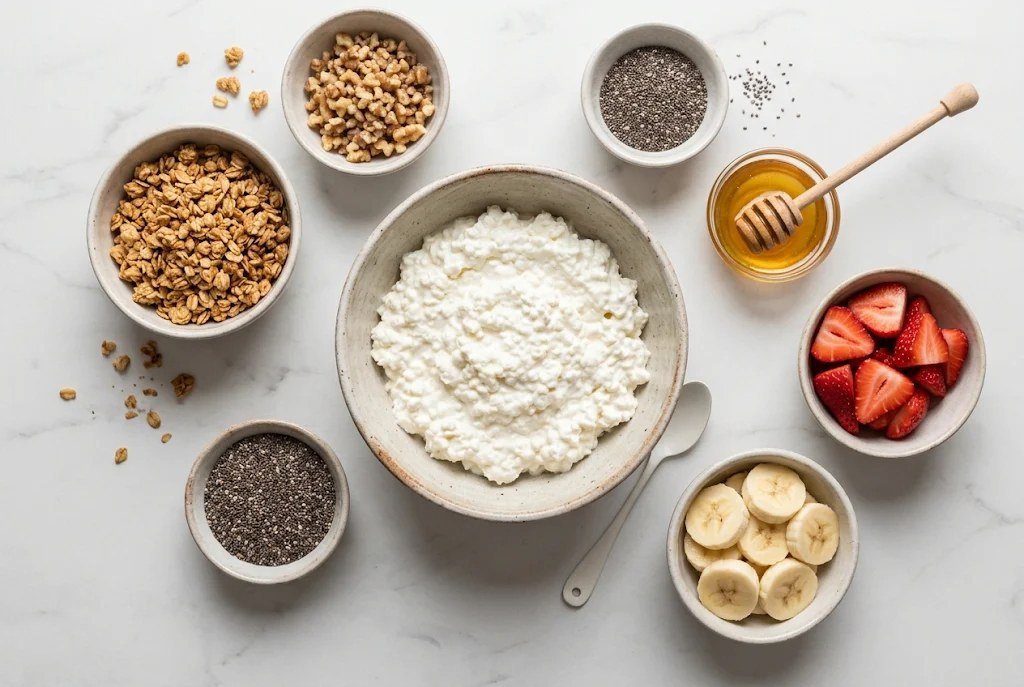
Toppings Bar: Mix and Match
| Category | Ideas |
|---|---|
| Fruit | Berries, banana, peaches, mango, pineapple, kiwi, apple, pear, figs |
| Vegetables and savory | Tomatoes, cucumber, avocado, radishes, roasted peppers, olives |
| Crunch | Granola, walnuts, almonds, pistachios, pumpkin seeds, chia, hemp seeds |
| Fat and flavor | Peanut or almond butter, olive oil, honey, maple syrup, cinnamon, everything seasoning |
| Extra protein | Hard-boiled eggs, smoked salmon, Greek yogurt, a scoop of protein powder |
Cottage Cheese Breakfast Bowls: Meal Prep and Storage
- Opened tub: follow the date on the container. Once opened, cottage cheese usually keeps about 5 to 7 days in the fridge. Discard it if it smells sour, looks slimy or shows mold.
- Assembled bowls: keep for 2 to 3 days. Store crunchy toppings and cut fruit separately and add them just before eating.
- Jars: layer cottage cheese on the bottom, then fruit, then nuts or granola on top for a portable breakfast.
- Freezing: not recommended. It turns grainy and watery when thawed, although it can still be used in cooking or baking.
Why Cottage Cheese Keeps You Full
Protein is generally the most filling macronutrient, and cottage cheese is a good source. Much of its protein is casein, which digests more slowly than whey, so it releases amino acids gradually. Combined with fruit or vegetables for fiber and a little fat for staying power, a cottage cheese bowl tends to hold you for several hours. Individual responses vary, and no single food makes weight loss happen on its own, but a high-protein breakfast can make it easier to avoid mid-morning snacking.
Common Mistakes with Cottage Cheese Breakfast Bowls
- Choosing sweet flavored cottage cheese. Pre-flavored tubs can have added sugar. Buy plain and add your own fruit.
- Skipping crunch. Soft cottage cheese with soft fruit can feel mushy. Add nuts, seeds or granola for contrast.
- Too much salt on savory bowls. Cottage cheese already contains sodium, so taste before seasoning.
- Using watery fruit too early. Cut fruit releases juice. Add it just before eating if you are prepping ahead.
- Making it too small. A quarter-cup is more of a snack. Use at least half a cup, and add eggs or nut butter for a bigger appetite.
A Sample Week of Cottage Cheese Breakfast Bowls
- Monday: berry peanut butter bowl
- Tuesday: avocado egg bowl
- Wednesday: apple cinnamon crunch bowl
- Thursday: whipped cottage cheese with strawberries
- Friday: Mediterranean bowl
- Weekend: tropical bowl or smoked salmon bowl
Dairy-Free and Kid-Friendly Variations
If you avoid dairy, look for plant-based cottage cheese alternatives made from soy, almond or other bases, or use silken tofu blended with a squeeze of lemon and a pinch of salt for a similar texture. Protein varies a lot between brands, so read the label. For children, small-curd or blended cottage cheese with soft fruit and a drizzle of honey (for children over one year old) is an easy first bowl. Offer small portions and let them choose toppings, which makes them more likely to eat it.
Cottage Cheese vs Greek Yogurt
| Cottage cheese (1/2 cup) | Plain nonfat Greek yogurt (1/2 cup) | |
|---|---|---|
| Protein | About 12 to 14 g | About 11 to 12 g |
| Calories | About 80 to 110 | About 65 to 75 |
| Texture | Lumpy, savory-friendly, can be blended | Thick, tangy, smooth |
| Sodium | Higher (300 to 450 mg) | Low (about 40 to 60 mg) |
| Best for | Savory bowls, high-protein breakfast | Sweet bowls, smoothies, sauces |
Both are excellent. Use whichever you enjoy, and you can combine them: half Greek yogurt and half cottage cheese gives a creamy bowl with less sodium.
Who Should Be Careful with Cottage Cheese?
- Milk allergy: avoid cottage cheese.
- Lactose intolerance: choose lactose-free versions or small portions.
- Low-sodium diets and kidney disease: cottage cheese is high in sodium, phosphorus and protein, so ask your doctor or dietitian first.
- Pregnancy: choose pasteurized products only, as with all dairy.
If you are managing appetite changes, for example on a GLP-1 medication, cottage cheese can be an easy source of protein in a small portion. Our guide on what to eat on Ozempic has more ideas.
Frequently Asked Questions About Cottage Cheese Breakfast Bowls
Is cottage cheese good for breakfast?
Yes. A half cup provides about 12 to 14 grams of protein, plus calcium, for around 90 calories. It is easy to pair with fruit, nuts or vegetables for a balanced meal.
How much protein is in cottage cheese?
About 12 to 14 grams per half cup (113 g), depending on the brand and milkfat.
Can I eat cottage cheese every day?
Many people do. Watch the sodium, choose a lower-sodium brand if needed, and vary your protein sources. Ask your doctor if you have kidney disease.
Does cottage cheese help with weight loss?
Its protein and calcium can help you feel full, which makes it a useful part of a balanced diet, but no food causes weight loss on its own.
How do I make cottage cheese less lumpy?
Blend it for 30 to 60 seconds until smooth, or choose a small-curd variety.
Which is better, cottage cheese or Greek yogurt?
They are similar in protein. Cottage cheese works well for savory bowls but has more sodium. Greek yogurt is lower in sodium and better for sweet bowls.
Can you freeze cottage cheese?
You can, but the texture becomes grainy and watery. It is better in cooking or baking after freezing than eaten as a bowl.
How long does cottage cheese last after opening?
Usually about 5 to 7 days in the fridge. Use the date on the container as a guide and discard it if it smells sour or looks slimy.
Final Thoughts on Cottage Cheese Breakfast Bowls
A cottage cheese breakfast bowl is one of the fastest high-protein breakfasts you can make. Choose a cottage cheese you like, blend it if you want it smooth, and then follow the base formula: fruit or vegetables, a crunchy topping and something for flavor. Within a few days you will find your favorite combination, and you can also pair it with our chia pudding or overnight oats with chia seeds for variety.



3 Comments